- Commission's Alleged Action Ignites Public Concern About The Safety Of The Nation's Corporate Records
By Celestine Okafor (Editor-in-chief)
PROLOGUE:
A DEAD MAN’S SHARES AND A CAC PORTAL THAT TELLS A DIFFERENT STORY
Strange things are currently happening in the Nigeria's Corporate Registry, the Corporate Affairs Commission (CAC). On paper, the Commission is Nigeria’s official guardian of corporate truth. Its electronic portal is meant to be the definitive source of who owns which shares, who directs which company and who controls what. But a dispute now before the Federal High Court in Abuja, has exposed what one side calls a “systemic compromise” of that portal. At its centre is DAAR Investment & Holding Company Limited (DIHL), the holding vehicle of DAAR Communications Plc, which operates the Africa Independent Television (AIT) and Raypower FM Radio.
The claimants, led by Chief Raymond Paul Dokpesi Jnr., the current Chairman of DAAR Communications Plc and first son of the company's founder and foremost media mogul, late High Chief Raymond Aleogho Dokpesi (the Ezomo of Weppa-Wanno), alleged that the CAC’s online portal was used to rewrite the shareholding structure of DAAR Investment and Holding Company Limited (DIHL) – redistributing 300,000 shares belonging to his late father, High Chief Raymond Aleogho Dokpesi Snr., without any court‑ordered probate, without any transfer documents, and without the knowledge or consent of most of the people who suddenly appeared as new shareholders.
The CAC has not yet formally responded to the allegations in court, and neither has it responded to a media enquiry by NIGERIAN NEWSLEADER Newspaper containing a legion of questions and sent to it's Registrar-General via an official letter dated Friday, May 29, 2026, seeking official explanations under the Freedom of Information Act on what actually happened in respect of the share allocations of the DIHL company.
NIGERIAN NEWSLEADER sought the following clarifications from the CAC:
(1) Who Made the Changes? The CAC portal shows multiple alterations between October 2025 and March 2026. Names were added, shares redistributed, and a minor (Catherine Anu Dokpesi, born on April 2009) appeared as an active shareholder with 83,333 shares. The CAC has not disclosed who – by name, login ID, or IP address – entered these changes. Was it a CAC staff member? An external “sub-administrator”? A hacked account? The CAC should kindly provide the IP logs, timestamps, and user IDs of every person who accessed and altered the DIHL shareholding record between 1st October 2025 and 31st March 2026.”
(2) What Documents Justified the Changes?The CAC’s own manual physical file contains no board resolution, no share transfer form, no instrument of transfer, no Form 2A, and no Letters of Administration to support any of the portal changes. The CAC has repeatedly refused access to inspect whatever documents it claims to have relied upon. The CAC also claims a “presumption of correctness” for its portal. But on what specific documents does it base that presumption? If no documents exist, on what legal basis were the changes made? The CAC should kindly list every document in the corporate registry's possession – by title, date, and signatory – that the registry relied upon to alter DIHL’s shareholding from the 2008 position to the October 2025 and March 2026 positions. If no documents exist, state so clearly.”
(3) Why Did the Register Continue to Change During Active Protest? A formal petition was filed on 17th October 2025. The CAC acknowledged it on 24th November 2025 and requested 14 days to act. Yet between October 2025 and March 2026 – during those “14 days” and beyond – the portal was altered again: William Dokpesi’s shares dropped from 166,667 to 83,334, and Catherine Anuoluwapo Dokpesi appeared as a new active shareholder. Why was the register not frozen pending investigation? Who authorized continued alterations while a fraud petition was pending? The CAC should kindly explain why the DIHL shareholding record was altered much later after the 17th October 2025 petition was received. Who authorized each alteration, and why was no freeze order issued?
(4) How Did Oluwatosin Dokpesi’s Name Appear Twice on October 2025?
(5) The CAC’s manual physical file (verified 8th October 2025) shows DIHL’s shareholding as at 28th January 2008: Raymond Dokpesi (300,000 shares), Raymond Paul Dokpesi Jr. (50,000), Aishatu Dokpesi (50,000), Ade Orekoya (10,000), Adamu Biu (10,000). No subsequent board resolution, share transfer form, or Form 2A exists in the physical file. On what specific document(s) did the CAC rely to alter this shareholding structure on the electronic portal? Please, provide the title, date, and signatory of each document.
(6) The October 2025 electronic status report shows two inactive entries for “Oluwatosin Dokpesi” with email This email address is being protected from spambots. You need JavaScript enabled to view it. and date of birth July 1969. This name has never appeared in any DIHL filing since incorporation in 1988.
How did this name enter the CAC portal? Who requested these entries? What document was provided to justify them?
(7) The March 2026 electronic status report shows “Catherine Anuoluwapo Dokpesi” (born April 2009) as an active shareholder with 83,333 shares. Her registered email is This email address is being protected from spambots. You need JavaScript enabled to view it. – the email of her mother. Who registered a minor as an active shareholder? On what document was this registration based? Was the minor’s guardian properly notified and did they consent?
(8) Between October 2025 and March 2026, William Dokpesi’s electronic shareholding decreased from 166,667 to 83,334, and Catherine Dokpesi appeared with 83,333 shares – a precise transfer of 83,333 shares. Who authorized this transfer? Kindly, provide the instrument of transfer as required by Section 175 of CAMA 2020. If none exists, explain the legal basis for the movement.
(9) Three separate probate registries (FCT High Court, Edo State, Lagos State) have confirmed in writing that no Letters of Administration or Probate have been granted for the estate of the late Raymond Dokpesi Sr., who died 29th May 2023. Did the CAC request or receive any grant of probate or Letters of Administration before permitting any change to the late founder’s 300,000 shares? If yes, attach the document. If no, explain why Sections 173 and 179 of CAMA 2020 were not followed.
(10) The CAC portal shows DIHL’s shareholding in DAAR Communications Plc increased from 4,890,523,000 to 5,016,418,000 – an increase of exactly 125,895,000 shares. First Registrars (the official company registrar) confirms in a letter dated 27th April 2026 that no transfer has been registered and no transfer documentation exists.
Who entered this change on the CAC portal? On what document was it based? Explain why First Registrars has no record of any such transfer.
(11) A formal petition was filed on 17th October 2025. The CAC acknowledged it on 24th November 2025 and requested 14 days to act. Yet alterations continued on the portal during this period. Why was the DIHL record not frozen pending investigation? Who authorised continued alterations after the fraud petition was filed?
(12) DIHL and its shareholders have made repeated formal requests to inspect the physical documents the CAC claims to have relied upon. These requests have been denied or ignored. Cite the specific law or regulation under which the CAC has denied access to inspect the company’s own physical file. If no such law exists, state when access will be granted.
(13) A formal pre-action notice was served on the CAC on 18th March 2026. As of 27th April 2026, no response has been received. Has the CAC received the pre-action notice? If yes, does the CAC intend to respond before the 30-day deadline expires? If no response has been sent, explain why.
(14) The CAC’s manual physical file and electronic portal contradict each other.
Which record does the CAC consider legally authoritative – the manual file or the electronic portal? If the portal, on what legal authority does it override manually filed and stamped documents? If the manual file, why has the portal not been rectified to match it?
However, internal CAC correspondences cited in court filings by NIGERIAN NEWSLEADER Newspaper, shows that the Commission acknowledged a “material discrepancy” between its manual physical file and the electronic portal, and asked for fourteen days to act, yet no corrective action was taken, according to the court claimants.
This is a classical inside story of a disputed corporate registry, the CAC, and the grave questions now hanging over Nigeria’s company register.
WHAT THE CAC’S OWN PAPER FILE SAYS – THE 2008 BASELINE
Court documents and certified CAC records attached to the case show a clear, uncontested starting point. According to CAC Form 2A dated January 28, 2008, stamped and verified by the Commission, the shareholding of DAAR Investment Holding Company Limited (DIHL) was as follows, according to shareholder shares percentage:
- High Chief Raymond Aleogho Dokpesi (deceased on May 2023) - 300,000 shares, representing 71.43% equity shares.
- Chief Raymond Paul Dokpesi Jnr. - 50,000 shares, representing 11.90% equity stake.
- Aishatu Dokpesi - 50,000 shares, representing 11.90% share hold.
- Ade Orekoya - 10,000 shares, representing 2.38%.
Engr. Adamu Biu, a maritime expert and former Managing Director/Chief Executive Officer of Nigeria Shippers Council (deceased) - 10,000 shares, representing 2.38%.
This brings the total share issued to 420,000, representing 100% shares.
The claimants state that no subsequent board resolution, no share transfer form, or CAC filing exists in the Commission’s manual physical file to alter this existing share structure for over a decade. That is the paper record. What appeared on the CAC’s electronic portal, the claimants say, was radically different.
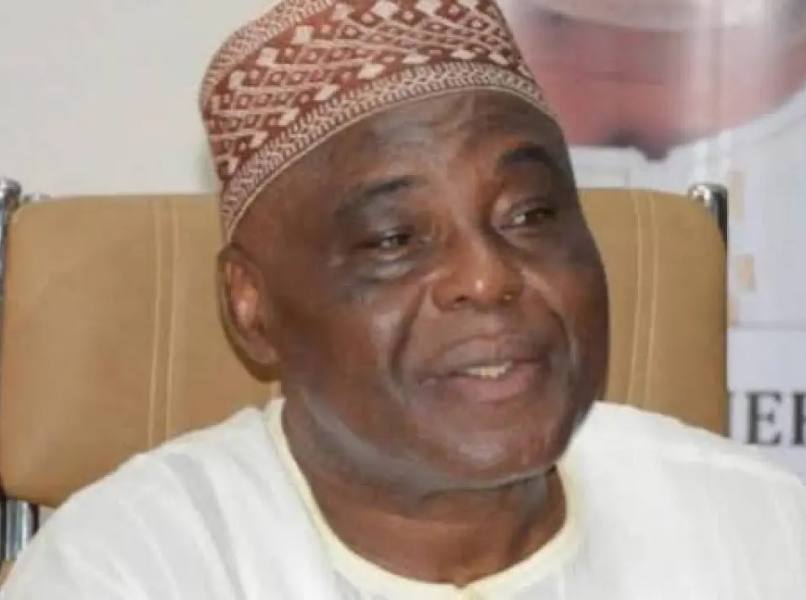 Late Chief Raymond Dokpesi
THE ELECTRONIC PORTAL – A “GHOST REGISTER” APPEARS
In October 2025, the incumbent DAAR Communications Plc chairman, Chief Raymond Paul Dokpesi Jnr. ordered a search of the CAC’s online portal. The electronic status report dated October 18, 2025, showed a completely different shareholding structure:
- Name Shares (electronic) and Status: Raymond Paul Dokpesi - 83,334 shares (Active).
- Peter Aiyeghena Dokpesi - 83,333 shares (Active).
- Halima Dokpesi - 83,333 shares (Active).
- Raji Dokpesi - 50,000 + 33,333 shares (Active).
- William Dokpesi - 166,667 shares (Active).
- Ade Orekoya - 0 shares (Inactive).
- Engr. Adamu Biu - 0 shares (Inactive).
- Aishatu Dokpesi - 0 shares (Inactive).
- Oluwatosin Dokpesi (two entries) - 0 shares (Inactive).
The late founder of the DAAR Company Group, High Chief Raymond Aleogho Dokpesi's 300,000 shares no longer appeared in his name. Instead, they had been redistributed among several individuals. Two “ghost” entries for “Oluwatosin Dokpesi”, a name which never previously associated with DAAR Investment and Holding Company Limited (DIHL), appeared, complete with a personal email address and date of birth, then zeroed out.
The claimants argue that a name does not enter a statutory corporate register twice, with specific personal details, by administrative accident.
SHARES MOVING WHILE A PETITION WAS PENDING – THE MARCH 2026 REPORT
Even more concerning to the claimants while their legal team was actively petitioning the CAC to investigate, was the fact that the Corporate Registry's portal continued to change. By March 10, 2026, a fresh status report showed as follows:
Shareholder: October 2025 shares and March 2026 shares Change:
- William Dokpesi - 166,667, 83,334 - 83,333 shares.
- Catherine Anuoluwapo Dokpesi -(Not listed) - 83,333 +83,333 shares (new)
The 83,333 shares that had been “warehoused” (as the claimants put it) in William Dokpesi’s name were now shown as transferred to Catherine Anuoluwapo Dokpesi, who was born in April 2009 – a minor. Her registered email on the CAC portal was not her own; it was the email address of her mother, Dr. Oluwatosin Dokpesi – the same person whose ghost entries had appeared in October 2025. The claimants say these alterations happened while their formal complaint was active before the CAC, and that the Commission never froze the record.
THE LEGAL IMPOSSIBILITY – NO PROBATE, NO TRANSFER INSTRUMENTS
Here is the crux of the legal dispute. Under Sections 173, 175, and 179 of the Companies and Allied Matters Act (CAMA) 2020, the claimants argue that the shares of a deceased person cannot be moved without a grant of Letters of Administration or Probate from a competent court; a proper instrument of transfer executed by a legal personal representative and a Board or shareholder approval where required.
High Chief Raymond Aleogho Dokpesi Snr., the founder of DAAR Investment and Holding Company Limited (DIHL) died on Monday, May 29, 2023. According to sworn affidavits and letters exhibited in court, no probate or Letters of Administration had been granted by any court in Nigeria as at April 2026. Three separate probate registries confirmed in writing as follows: Registry Finding at the High Court of the FCT, Abuja says no application, no caveat and no grant. The Edo State Probate Registry also said no application filed and no Letters granted. The
Lagos State Probate Registry also stated that no record was found at the Lagos Division, but search at Ikeja registry is still on-going. Yet the CAC portal showed 300,000 shares redistributed as if the dead man (High Chief Raymond Aleogho Dokpesi) had signed transfer forms from the hades. However, in his personal statement filed with the court and released to the press, Chief Raymond Paul Dokpesi Jnr. said: “Under Nigerian law, the dead cannot sign transfer forms, and their interests cannot be moved without the intervention of the courts.”
TWO CAMPS – THOSE WHO DISCLAIMED, AND THE ONE WHO DEFENDED
Perhaps the most unusual evidence in the court file is the pattern of responses from the people who appeared on the altered register.
The majority disclaimers are the four (4) individuals who appeared as purported beneficiaries: Chief Raymond Paul Dokpesi Jnr. himself, Williams Dokpesi, Raji Dokpesi and Halima Dokpesi. They have formally told the CAC that they had no knowledge of, or did not consent to the allotments of the controversial mystery shares.
According to their individual testimonies, Raji Dokpesi on April 26, 2026 stated thus: “I state categorically that I had no knowledge of, nor did I consent to, any such allotment… I hereby expressly disclaim the purported allotment in its entirety.”
Halima Dokpesi on the same April 26, 2026, said: “I have no knowledge of, nor was I privy to, any such redistribution… I was not previously aware of the extent of my late father’s shareholding.”
William Dokpesi on December 15, 2025 stated thus: “I participated in steps taken to reflect what was believed to be a fair family structure… in good faith. I acknowledge that certain statutory filings may not have been properly filed. I express willingness to support procedural reversion.”
The only sole defender who filed a substantive response defending the altered electronic register, was Engr. Peter Aiyeghena Dokpesi, a younger brother of Chief Raymond Paul Dokpesi Jnr., the chairman of DAAR Group.
In his response to the CAC dated December 11, 2025, Peter Aiyeghena Dokpesi argued that DAAR Investment Holding Company Limited (DIHL) underwent a “comprehensive restructuring in 2012” that re-aligned shareholding, and that Raymond Paul Dokpesi Jnr. had acted as a director under that structure for 13 years without objection. He also noted that the petition provided “no minutes, no resolutions, no share transfer forms.” Peter's logic is seemingly deficient in tenable evidence to reinforce his claims.
But the claimants, however, point out that the 2012 resolution on the CAC’s own physical file deals only with directors – not shares. No 2012 share transfer document exists in the manual file. And Peter’s response did not address the probate evidence. Notably, Peter’s response was filed purportedly on behalf of Catherine Anuoluwapo Dokpesi (the minor), even though he is neither her parent nor legal guardian. Catherine’s registered email on the portal belonged to Dr. Oluwatosin Dokpesi – the same person whose ghost entries appeared twice on the register.
In the course of our investigation of this matter, NIGERIAN NEWSLEADER Newspaper sought the side of the story of the parties involved the case, including Dr (Mrs) Oluwatosin Dokpesi, but none of them was willing to offer comment. While one of the Claimants, Chief Raymond Paul Dokpesi Jnr was said to be out of the country, Raji Dokpesi told this news medium, that his family is in one accord in their opposition to the share alterations except only one person. He, however, insists that the only pathway to remedy the situation is for the CAC to correct the share alterations which he said was curiously made by the nation's corporate registry.
THE CAC’S CONDUCT – AS LAID OUT IN COURT FILINGS
The claimants have attached a detailed timeline of their engagement with the CAC. According to court documents, the dates of events are as follows: October 17, 2025, a formal petition was filed by a legal luminary, Barrister Ferdinand Orbih, SAN. On November 24, 2025, CAC acknowledges the petition and requests 14 days to act. On
December 11, 2025, Peter Dokpesi files a response defending the register. On December 19, 2025, there was a follow-up letter, but no response from CAC. On
February 18, 2026, a meeting was scheduled with the CAC's Registrar‑General but it was cancelled. On February 23rd, 2026, the Registrar‑General acknowledges seriousness, undertakes to review the March 18, 2026 Pre‑action notice issued. On April 27, 2026, Originating Summons was filed at the Federal High Court, Abuja.
The claimants alleged that the CAC refused access to inspect the physical documents it supposedly relied upon; and that the Commission claimed a “presumption of correctness” for the portal even after being notified of potential fraud; and also that the CAC failed to produce the Commission's IP logs, to upload timestamps, or reveal the identity of the sub‑administrators who made the unauthorized share changes; and that the CAC allowed the record to continue changing while the complaint was active. The CAC, apparently, has not yet filed its formal defence. The court will ultimately determine whether these allegations are proved.
THE PUBLIC COMPANY DIMENSION – AIT AND RAYPOWER
While the DAAR Investment and Holding Company Limited (DIHL) is a private company, its subsidiary – DAAR Communications Plc, operator of the popular AIT and Raypower FM Radio – is publicly listed on the Nigerian Stock Exchange (NGX).
The dispute has a second layer: The claimants say the CAC portal also showed an inflation of DAAR Communications Plc shares held by DIHL from 4,890,523,000 to 5,016,418,000 – an increase of exactly 125,895,000 shares. But First Registrars, the official company registrar for DAAR Communications Plc, confirmed in a letter dated April 27, 2026 (exhibited in court) that no transfer into DAAR Investment and Holding Company Limited (DIHL’s) name has been registered; and also that no transfer documentation exists in their custody; and that no recent change affects substantial shareholding.
Thus, the claimants argue, that the CAC portal contradicts the official registrar’s records – a potential breach of market integrity. Under the Nigerian Stock Exchange (NGX) Rulebook Rule 17.5 and the Investments and Securities Act, such discrepancies may constitute price‑sensitive information that a listed company must immediately disclose.
DAAR Group's Chairman, Chief Raymond Paul Dokpesi Jnr. states that he went public, not out of family anger, but out of fiduciary duty. He offered that: "Maintaining silence would not only be ‘irresponsible’ but could be legally interpreted as concealing a material fact, potentially exposing me to liability for facilitating a ‘false market.’”
WHAT THE LAW SAYS – THE CLAIMANTS’ CASE
The Originating Summons filed at the Federal High Court, Abuja cites multiple provisions of Company and Allied Matters Act (CAMA) 2020. The claimants seek: a declaration of court that the CAC is under a mandatory duty to investigate the alteration; and an order rectifying the DAAR Investment and Holding Company Limited (DIHL) register to the 2008 position; and also a court order of mandamus compelling the CAC to perform its statutory duties and costs of N50 million awarded against the Nigeria's Corporate Registry, the CAC.
The legal provisions invoked include sections of the relevant laws allegedly breached by the CAC (as claimed by the plaintiffs). They include Sections 173 and 179 which deals with moving deceased’s shares without probate/Letters of Administration. Section 175 which states no proper instrument of transfer. Section 142 stating no pre‑emptive offer to existing shareholders. Section 149 stating no board or general meeting approval for the share allotments. Section 129 stating no CAC Form 2A for any allotment. Section 862 stating Criminal liability for fraudulent alteration of Corporate register (to be determined by a criminal court).
The CAC has not yet filed its defence in court as at time of filing this investigation report. The court will however decide on the validity of these claims.
THE HUMAN STORY – A LEGACY IN THE COURTS
Behind the legal jargon, however, is what appears to be the tragedy of a family's business interest. Late High Chief Raymond Aleogho Dokpesi was a pioneer of private broadcasting media in Nigeria. He built the African Independent Television (AIT) and Raypower FM Radio Stations from nothing in 1993/1994, barely a year after the junta of Nigeria's former military president, General Ibrahim Babangida liberalized or deregulated the broadcast media industry in December 1992 and appointed late Chief Tom Adaba as the pioneer Director-General of the National Broadcasting Commission (NBC), the regulatory and licencing agency for Radio and Television media in Nigeria. High Chief Dokpesi Snr. died on May 29, 2023, leaving a successful media empire, but apparently, no concluded probate process.
In his personal statement, Raymond Dokpesi Jnr. wrote: “I will not be intimidated. These CAC online portal manipulations frustrate our efforts to settle outstanding wages and severance pay for our staff, exit statutory debts and damage our brand.” He also claims to have received “grave warnings” regarding his safety, which he says he has since reported to security agencies.
WHAT HAPPENS NEXT? – THE COURTS WILL DECIDE
As of late April 2026, the Federal High Court in Abuja is seized of the matter. The claimants have served a pre‑action notice and filed an Originating Summons. The CAC is expected to enter appearance and file its defence. Petitions have also been sent to the Securities and Exchange Commission (SEC); the Nigerian Exchange (NGX) Regulation; the State Security (the Department of State Services, DSS) and the Inspector‑General of Police.
EPILOGUE:
A WARNING FOR EVERY COMPANY OWNER, OR A FAMILY DISPUTE BLOWN OUT OF PROPORTION!
This is a story still unfolding. For the claimants, this incident is a clear proof that the Nigeria’s corporate registry, the Corporate Affairs Commission (CAC) can be manipulated without legal consequence – a threat to every company in the country. For the CAC and those who defend the altered register (including Peter Dokpesi), it is a family inheritance dispute dressed up as corporate fraud, where a 2012 restructuring is being ignored and the real issue is a fight for control of a broadcasting empire.
The court will decide which version is true. What is not disputed is that the CAC’s manual file and its electronic portal do not agree – and that, for now, no probate has been granted over the late founder’s 300,000 shares.
Chief Raymond Paul Dokpesi Jnr. put it this way in his final public statement before the court case commenced: “We cannot allow Nigerian institutions to be portrayed as lawless zones for corporate manipulation. To attract foreign direct investment, as well as to protect the reputation of our nation and our markets.”
The CAC has not yet issued a formal public response. Attempt by NIGERIAN NEWSLEADER Newspaper under the Freedom of Information Act to get the Commission to disclose, in the public interest, why the share alteration was made and who actually ordered the alteration, among other probing questions demanding answers, has not been responded to as at the time of writing this report on Tuesday, June 16, 2026. The CAC's defence, when filed, will be reported.
For the Dokpesi family, the case is about their father’s legacy. For Nigeria and Nigerians and the nation's corporate community, it is about whether the CAC’s portal is a trusted public record – or a battleground where estates can be rewritten with a few keystrokes, if the courts eventually finds the truth of the whole claims.
The court’s will eventually come with an answer. Until then, every allegation remains exactly what it is in the eyes of the law: an allegation! NNL.