


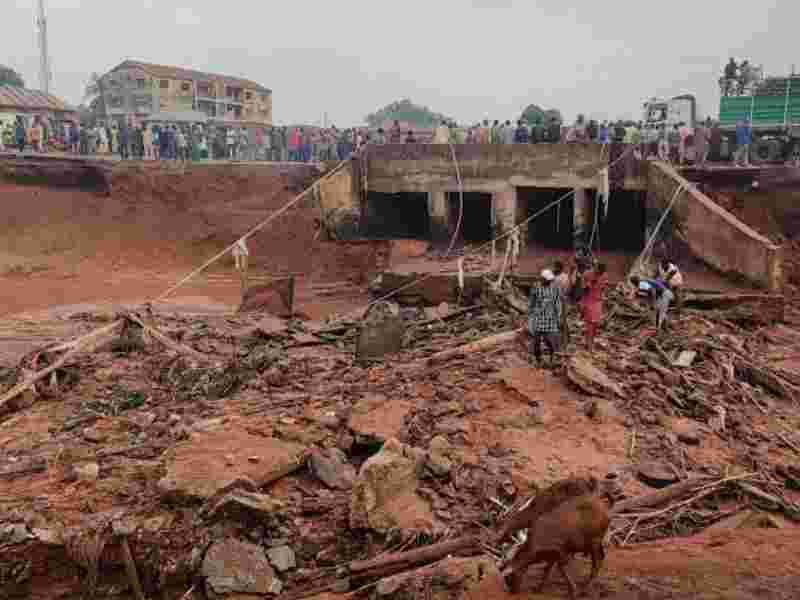
(A NewsLeader Editorial, Tuesday, October 13, 2026)
Across the globe, today, Tuesday, October 13, 2026, is both unique and important. It is set aside as World Disaster Risk Reduction Day by the United Nations.
To start with, disasters do not always announce their arrival. Sometimes, they come as floods that swallow homes and communities or buildings that collapse without warning, or fires that consume markets, or even storms that destroy livelihoods. At other times, they emerge from industrial accidents, disease outbreaks, environmental degradation and human negligence. Whatever their form, disasters expose the vulnerability of societies and test the preparedness, competence and compassion of their leaders.
As the world marks the United Nations International Day for Disaster Risk Reduction today, an observance established to promote a global culture of preventing disasters, reducing risks and strengthening community resilience, the theme of this year 2026 is: “Resilience Starts at Home".
It offers Nigeria an important opportunity to reconsider how its homes, communities, institutions and public infrastructure are designed, maintained and protected against hazards. The message is straightforward, which is that preventing disasters must become a national priority rather than an occasional public concern activated only after lives have been lost.
The urgent need to prevent disasters must go beyond emergency response. The significance of this international observance lies in its emphasis on prevention, preparedness and resilience. Although some hazards cannot be prevented entirely, their consequences can often be substantially reduced through planning, early warnings, appropriate infrastructure, public education and responsible governance.
The United Nations' Sendai Framework for Disaster Risk Reduction 2015–2030 provides an international blueprint for reducing disaster risks and losses. Its central message is that governments and societies must understand the risks they face, strengthen disaster-risk governance, invest in resilience and improve preparedness for effective response and recovery. The urgency is unmistakable.
The World Meteorological Organization reported in October 2024 that more than 100,000 people in Africa died or were reported missing because of disasters between 2013 and 2022, while another 131 million had their lives disrupted. These figures demonstrate the enormous human cost of inadequate preparedness and the need for sustained investment in disaster prevention.
Nigeria cannot afford complacency in this regard, not with the spate of disasters the country has experienced and have continue to witness in recent years. The unfortunate incidences of flooding, erosion, building collapses, market fires, road accidents, industrial incidents and other emergencies repeatedly threaten lives, homes, businesses and public infrastructure. Climate-related hazards compound existing problems, while poor construction practices, blocked drainage systems, inadequate urban planning and disregard for safety regulations can turn manageable hazards into major tragedies.
Nigeria must therefore learn from repeated disasters. One disturbing feature of disaster management in Nigeria is the tendency to respond vigorously after a tragedy but allow public attention to fade before its underlying causes are addressed. Flood warnings may be issued, yet people continue building on waterways and floodplains. Buildings collapse, yet questions about structural integrity, professional supervision and enforcement of building regulations persist. Markets are gutted by fires, yet inadequate access roads, unsafe electrical installations and insufficient firefighting facilities remain concerns.
Government agencies responsible for emergency management deserve recognition for their interventions, including rescue operations, relief distribution, public enlightenment and support for affected communities. The National Emergency Management Agency (NEMA), state emergency management agencies, the Nigeria Hydrological Services Agency, the Nigerian Meteorological Agency, fire services and other relevant institutions all have important roles to play.
However, their effectiveness must be measured not merely by how quickly they arrive after disaster strikes but also by how successfully their work prevents deaths and destruction. The Federal Government and state governments must therefore improve coordination between forecasting agencies, emergency managers, environmental authorities, urban planners and local governments. Weather forecasts and flood alerts must reach communities in languages and formats that people understand, accompanied by clear instructions about evacuation routes, safe shelters and protective measures.
Early warnings are useful only when people receive them in time, trust them and know what to do. Governments must put safety before politics. The 2026 theme, "Resilience Starts at Home", places particular responsibility on governments and housing authorities. A home should offer protection, not become a death trap because of poor construction, dangerous location or inadequate maintenance.
Governments must enforce building codes without political interference, strengthen inspections, prosecute proven cases of professional negligence and prevent unauthorised construction on waterways and other high-risk locations. Urban planning must be based on credible risk assessments rather than political patronage or the commercial interests of powerful individuals. Drainage channels must be constructed and maintained, refuse disposal properly managed, and wetlands and natural floodplains protected.
Where homes occupy exceptionally dangerous locations, authorities must pursue lawful, humane and properly planned relocation, with adequate consultation and assistance for affected families. Demolition without viable alternatives can deepen poverty and hardship; ignoring serious dangers can cost lives.
Equally important is that disaster-risk reduction must receive adequate and transparent funding. Spending on preventive drainage, stronger public buildings, fire services, emergency communications and resilient infrastructure may attract less publicity than distributing relief materials, but it can save more lives and public money over time. The private sector and communities have responsibilities too. Disaster prevention is not the exclusive responsibility of government. Private developers, construction companies, manufacturers, transport operators, market associations, schools, hospitals, financial institutions and employers must make safety a fundamental operational requirement.
Developers must employ qualified professionals and use appropriate materials. Businesses should install functional fire alarms, extinguishers and emergency exits, while conducting regular safety drills. While factories must observe environmental and occupational safety standards. Insurance companies and financial institutions should encourage resilient construction and provide accessible products that help households and businesses recover from disasters.
Communities must also participate actively. Residents should avoid dumping refuse into drainage channels and report dangerous structures and electrical installations as well as protect the environment and cooperate with credible emergency warnings.
Families can begin by identifying hazards around their homes, keeping emergency contacts accessible, preparing basic emergency supplies, securing important documents and agreeing on evacuation arrangements. Parents should teach children how to respond to fires, floods and other emergencies. Schools should conduct age-appropriate safety exercises, while hospitals must maintain emergency plans that protect patients, staff and essential medical equipment.
These measures may appear small, but their collective impact can be substantial.
Technology, education and the media matter in this campaign. Nigeria must strengthen the use of technology in disaster forecasting, risk mapping and emergency communication. Mobile alerts, radio broadcasts, community networks and digital platforms can help communicate warnings rapidly, provided they are reliable and accessible to people in rural areas and vulnerable communities.
The Federal Government should also strengthen cooperation with universities, professional associations, scientific institutions and international partners to improve research, data collection and disaster-management training. The media has a particularly important responsibility. Beyond reporting casualties and destruction, journalists should investigate the failures that expose communities to danger, explain warning systems and educate the public about practical preventive measures.
Public enlightenment must be continuous, not restricted to the rainy season or the aftermath of a major tragedy. Misinformation about disasters should be challenged, while official agencies must communicate promptly, accurately and transparently.
NIGERIAN NEWSLEADER'S CALL TO ACTION
As Nigeria joins the international community to mark this year's observance, the Federal Government, state governments, local councils, businesses, professional bodies, community leaders and citizens must translate its message into measurable action.
We urge governments to prioritise preventive investment, enforce safety regulations fairly, strengthen early-warning systems and publish clear disaster-preparedness plans. In the same vein, we call on businesses and property developers to put human safety ahead of immediate profit. We encourage families and communities to take preparedness seriously and demand accountability from institutions responsible for protecting them.
Above all, disaster victims must not be abandoned after the cameras disappear. Assistance should be timely, transparent and sensitive to the needs of children, older people, persons with disabilities and low-income households.
This year's United Nation's theme reminds us that resilience begins where people live, but it cannot end there. Safe homes require responsible builders, effective public institutions, sound environmental management and governments willing to enforce the law. Nigeria must move from mourning preventable tragedies to preventing them. The true measure of disaster-risk reduction is not the number of conferences held or statements issued, but the lives saved, homes protected and communities made safer.
On this International Day for Disaster Risk Reduction, let every Nigerian embrace a simple principle: prevention is a shared responsibility, preparedness is a public necessity, and human life must always come first. NNL.