

By Celestine Okafor (Editor-in-chief)
Forty years ago, on Thursday, October 16, 1986, the literary world woke to a piece of news that seemed to carry the weight of an entire continent of Africa.
From Stockholm, the capital of Sweden, came the joyful announcement that a Nigerian literary writer, playwright, poet, novelist, academic, social critic, civil rights activist and public intellectual, Professor Wole Soyinka, had been awarded the 1986 Nobel Prize in Literature. It was like a golden laurette award that changed Africa's literary story.
For Africa, the Nobel Prize was more than the recognition of one extraordinary writer. It was a moment in which African literature, long interpreted through the eyes of outsiders and frequently forced to struggle for equal space within the international literary establishment, suddenly occupied the centre of the world's cultural stage. Soyinka had become the first African recipient of the Nobel Prize in Literature.
Forty years later, today, Friday, October 16, 2026, the significance of that October 1986 announcement remains difficult to measure. It was a triumph for Professor Soyinka, but it was also a landmark for African letters—a moment that demonstrated that African experiences, myths, histories, tragedies, political struggles and cultural imaginations could speak with authority to the universal human condition.
The Swedish Academy's citation described Soyinka as a writer who, “in a wide cultural perspective and with poetic overtones fashions the drama of existence.” Its assessment highlighted the breadth of his work across drama, poetry, prose and essays, while particularly praising his ability to draw from African traditions and Western literary influences without reducing African culture to exotic decoration.
Soyinka was born in Ake, Abeokuta, in Ogun State, South West, Nigeria, on July 13, 1934. His formative years exposed him to both Christian education and Yoruba cultural traditions. He later studied English Literature in Nigeria at the University of Ibadan, Oyo state before proceeding to Leeds University in Britain. He worked in theatre in London before returning to Nigeria and becoming one of the country's most influential dramatists and intellectual. He lectured at then University Ife, now Obafemi Awolowo University, Ile - Ife, in Osun State.
By the time the Nobel announcement was made in 1986, Soyinka was already a formidable literary personality. He had written important works including: The Lion and the Jewel, A Dance of the Forests, The Interpreters, Season of Anomy, Death and the King's Horseman, Idanre and Other Poems and The Man Died, among other literary works. His writing was never simply about entertainment. Politics, tyranny, freedom, cultural identity, corruption, human dignity, violence and the moral responsibilities of individuals and societies repeatedly entered his work. Indeed, Soyinka's literary career had often brought him into direct confrontation with political power.
During the Nigeria-Biafra Civil War, he was imprisoned for more than two years after opposing the nation's fratricidal conflict and attempting to mediate. His prison experience profoundly influenced his literary imagination. Some of the poems later associated with A Shuttle in the Crypt emerged from that period, while his Magnum opus book, 'The Man Died' became a major literary record of imprisonment and political repression.
The Swedish Academy specifically noted the connection between his imprisonment, his poetry and his moral resilience. Soyinka was therefore not simply a writer who happened to become political. For him, literature and the struggle for human dignity were deeply connected.
The Nobel announcement was the beginning of Africa's entry into the city of Stockholm. It was historic partly because of what it represented in the history of international literary recognition. Before Soyinka, Africa had produced writers of enormous international reputation, including Chinua Achebe, Ngũgĩ wa Thiong'o, Léopold Sédar Senghor, Cyprain Ekwensi, Chris Okigbo and others. Yet the continent had not produced a Nobel laureate in literature.
Soyinka's victory did not suddenly create African literature. It had already been flourishing. What it did was to give an extraordinary international institutional recognition to a body of African literary creativity that had too often been treated as peripheral to the dominant literary traditions of Europe and North America.
The Swedish Academy itself emphasised that Soyinka's work emerged from a sophisticated synthesis. His writing drew deeply from Yoruba mythology, rituals and cultural patterns while also engaging with European literary traditions. This was significant in the sense that Soyinka did not write as though African culture needed permission from Europe to exist. Neither did he isolate African experience from the wider human experience. He took the particular and made it speak to the universal. The gods, rituals, tragedies, political tyrants, ordinary citizens, intellectuals and moral dilemmas in his works belonged to particular African worlds, yet the questions they raised about power, death, freedom, responsibility, identity and human dignity, were not confined to Africa. That was one of the great lessons of the Soyinka Nobel moment.
Perhaps the greatest implication of Soyinka's Nobel Prize was the psychological one. It was more than a prize to one. For generations, African writers had confronted the difficult task of telling African stories to a world literary establishment that did not always understand, appreciate or accept them on their own terms. Soyinka's Nobel Prize provided powerful evidence that an African writer could enter the highest international literary arena without abandoning the cultural resources of his own society. His Yoruba inheritance was not an obstacle, rather, it was part of his intellectual strength. The myths, rituals and cultural memory of his people became material for sophisticated literature capable of engaging readers far beyond Nigeria.
The Nobel presentation speech stressed precisely this quality, noting that Soyinka had successfully combined a rich African heritage with European literary traditions and his own distinctive creativity. That synthesis became part of his literary signature. The Nobel platform became another stage.
Soyinka did not treat the Nobel platform merely as a celebration of personal success.
His Nobel lecture, delivered in Stockholm, Sweden, turned attention to the political and moral crisis of the then apartheid policy in South Africa. At a moment when he could have spoken principally about his own career, Soyinka used the international platform to address racial oppression, inequality and the struggle for freedom. His intervention demonstrated another characteristic that has remained central to his public identity of the the writer as a witness.
For Professor Wole Soyinka, literary accomplishment did not require silence in the face of injustice. His Nobel recognition consequently carried a double message. The first was artistic. African literature had produced a writer whose work belonged among the world's most significant literary achievements. The second was civic. The African intellectual and writer could use global recognition to confront questions of freedom, racism, oppression and human dignity.
Soyinka's Nobel Prize was not followed by a sudden flood of African Nobel laureates, but the historical significance of his achievement became clearer with time. His Nobel award opened road for other literary writers of African decent. For instance, the Egyptian novelist, Naguib Mahfouz, won the Nobel Prize in Literature in 1988, becoming the first Arab writer to receive the award. South African writers like Nadine Gordimer and later J.M. Coetzee, also received the prize.
Other writers of African or African-diaspora backgrounds subsequently entered the Nobel conversation and the global literary canon. Soyinka's achievement therefore became part of a larger transformation in the international visibility of African writing. Yet the 1986 breakthrough remains unique because it was the first in the continent. Every history of African Nobel recognition in literature must pass through Stockholm in 1986.
However, there is also an unavoidable historical irony in discussing Professor Wole Soyinka's Nobel anniversary. Africa possessed several writers whose influence had already crossed national and continental boundaries. Foremost literary writers like Professor Chinua Achebe, for instance, had transformed the world's understanding of colonial encounter through his famous book, 'Things Fall Apart' and his other works. Within the African literary family came the Kenyan-born Professor Ngũgĩ wa Thiong'o formally called James Ngugi before he changed to his Swahili native language and adopted the name, Ngũgĩ wa Thiong'o. Ngugi had built a powerful literary and intellectual tradition around language, colonialism and African identity. Soyinka himself has consistently existed within this larger African literary family rather than outside it.
Soyinka's Nobel Prize should therefore not be interpreted as proof that African literature began with him. Infact, it did not. That was why Chinua Achebe emphasized that the Nobel Prize does not make anyone the Asiwaju (leader) of Nigerian literature. Rather, it represented a major international acknowledgment of a literary tradition that had already established its own voices, themes, histories and intellectual authority.
Forty years after that historic announcement, African literature occupies a much larger space in global publishing, universities, theatre, cinema and cultural debate. The question now is: what has changed? African writers are translated more widely. African literature is taught in universities around the world, especially at the various Institutes of African Studies in various foreign universities. African novels, poetry, drama and memoirs have become increasingly visible in international literary markets.
Yet the Soyinka anniversary also invites difficult questions. Has Africa sufficiently invested in its writers? Have governments created environments in which literature, theatre, publishing and the arts can flourish?
Are African schools producing readers as effectively as they produce examination candidates? Can African publishing houses compete internationally? And perhaps most importantly, are African societies adequately preserving their literary heritage for younger generations? The Nobel Prize cannot answer these questions. But Soyinka's achievement reminds Africa of what becomes possible when intellectual excellence is nurtured rather than neglected.
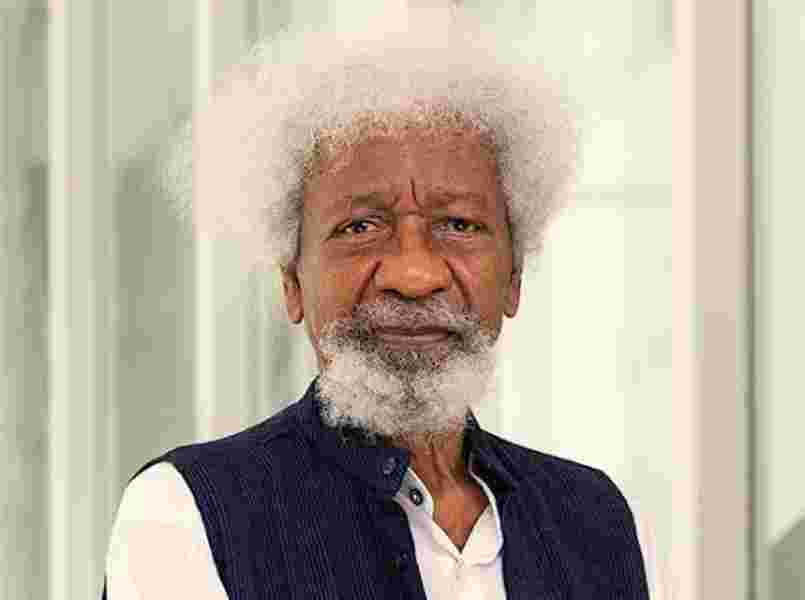
Professor Wole Soyinka's importance therefore extends beyond the Nobel medal. The grey-haired Professor is an enduring example. He remains a symbol of the possibility that an African intellectual can be deeply rooted in local culture while participating confidently in global intellectual life. Soyinka's work also demonstrates that African traditions do not have to be diluted before they can become universal. His career also demonstrates the difficult relationship between art and power.
The writer can celebrate society, but can also interrogate it. He is the dramatist who can entertain and can also disturb. The poet can create beauty and also preserve memory. Just as the intellectual can enjoy recognition and still question authority. That combination explains much of Soyinka's enduring influence in his 92 years of existence on earth.
The 40th anniversary of Soyinka's Nobel Prize should therefore not be reduced to a ceremonial celebration of an elderly literary giant. It is a legacy still demanding continuation, and should become a moment of reflection on the state and future of the African literature. Africa needs more schools that encourage reading, more libraries, stronger publishing industries, better support for theatre and the arts, serious literary criticism, stronger translation networks and greater preservation of indigenous languages and oral traditions. Most of all, Africa needs an environment in which young writers can experiment, challenge conventions and tell difficult truths without fear.
Though Wole Soyinka's Nobel Prize was awarded to one man, but its historical meaning, however, belongs to many generations. On that October 16 day in 1986, Stockholm did not create African literature. Africa had possessed its literary traditions long before then. But the Nobel announcement placed one of Africa's greatest literary voices unmistakably on the world's most prestigious literary stage.
Forty years later, the echoes of the Nobel Prize still remain. The lesson of Soyinka's journey is perhaps that literature becomes most powerful when it is simultaneously rooted, and universal when it remembers where it comes from, yet speaks boldly to the whole human family. That may be the most enduring gift of the Soyinka Nobel moment: the affirmation that an African story, told with artistic excellence and intellectual courage, does not have to ask permission to become a world story.
The core historical details of that Nobel prize award are grounded primarily in the Swedish Academy/Nobel Foundation's 1986 press release, presentation speech, in Soyinka's Nobel lecture and the Nobel Foundation's biographical record. The Nobel Foundation explicitly identifies Soyinka as the first African Nobel Literature laureate and describes the cultural synthesis at the heart of his work. NNL.