
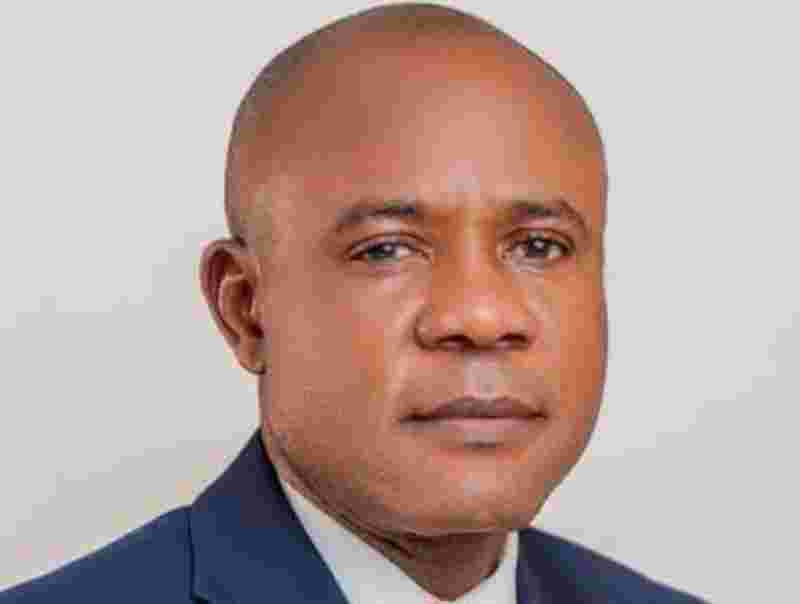
Three years and five months of ambitious projects, coupled with controversial decisions, political realignment and the battle for a second term, has governor Peter Ndubisi Mbah really earned the trust of Ndi Enugu in 2027?
By Celestine Okafor (Editor-in-chief)
When Governor Peter Ndubuisi Mbah assumed office on May 29, 2023, he promised to change the development trajectory of Enugu State through an ambitious economic transformation agenda encapsulated in the slogan, “Tomorrow Is Here.”
It was a declaration that Enugu would no longer be content with incremental development but would pursue a more ambitious future built on modern infrastructure, technological innovation, improved education, accessible healthcare, agricultural expansion, industrialisation and a stronger private-sector economy.
Three years and five months later, as the state approaches another governorship election in 2027, the fundamental question is whether Mbah has delivered enough to justify another four years in the Government House, despite a deluge of geographical pledges for support.
The answer requires looking beyond government publicity, opposition criticism and political endorsements. It demands an assessment of projects delivered, policies implemented, public concerns raised, economic results achieved and the extent to which ordinary people have benefited.
The evidence suggests that Mbah has established a strong record of project activity and institutional ambition. However, concerns about project quality, the cost and sustainability of his development model, the distribution of benefits and his controversial defection from the Peoples Democratic Party (PDP) to the All Progressives Congress (APC) complicate his re-election prospects.
The governor has made significant strides, but whether those strides amount to an unquestionable mandate for a second term remains a matter for the electorate in February or March next year.
Mbah's central promise was to transform Enugu from a predominantly civil-service and consumption-driven economy into a more productive, diversified and investment-friendly state. One of his most ambitious targets was to grow the state's gross domestic product from approximately $4.4 billion to $30 billion by 2031. This is an extraordinary ambition for a state whose economic potential has historically rested on commerce, agriculture, public administration, education and its strategic position in the South-East.
The administration's strategy has included extensive road construction, smart schools, primary healthcare facilities, water infrastructure, transport modernisation, agricultural investments and the revival of public assets. According to the state government's September 2026 presentation, its administration has constructed or reconstructed more than 1,521 kilometres of roads, developed over 7,000 classrooms and undertaken the construction of 260 Type-2 primary healthcare centres across Enugu state's 260 wards.
The government also lists Enugu Air, the New Enugu Smart City and the rehabilitation of dormant public assets among its major achievements. On the exterior, these figures are impressive, although the government’s claims require independent verification of completed kilometres, operational facilities, expenditure and actual service delivery.
Nevertheless, the breadth of activity distinguishes Mbah's administration. His government has pursued several major interventions simultaneously rather than concentrating exclusively on conventional roads and public buildings.
Yet, Mbah's 'Tomorrow Is Here' which is a political slogan rather than a vision, must ultimately be judged by outcomes, not the number of projects announced. In putting his performance into perspective, we must worry about whether the school children in Enugu are learning better now? Are patients in the State's hospitals receiving affordable treatment? Are businesses, small and medium scale and the tertiary ones growing and expanding in operation? Are the rural communities in the state enjoying improved access to good roads and markets? At the human capital level, are unemployment and poverty declining in Enugu?
These are the questions that will determine whether the slogan becomes a lasting development philosophy or remains an effective political campaign message.
Education is arguably one of the administration's most ambitious policy areas. Education in Enugu state under Peter Mbah administration is seemingly a transformation with questions to answer.
The Smart Green Schools initiative, designed to establish modern educational facilities across the state's 260 wards, represents an attempt to move public education beyond poorly equipped classrooms towards technology-supported learning. The programme promises better buildings, digital learning facilities, science laboratories and improved learning environments.
President Bola Ahmed Tinubu's January 2025 visit to Enugu provided an opportunity to commission completed projects, including 30 Smart Green Schools and 60 Type-2 primary healthcare centres. The occasion offered an early indication of the scale of the governor's development programme.
However, the initiative has also attracted troubling scrutiny. Media investigative reports earlier this year have significantly raised concerns about the quality of construction at some of the Smart Green Schools, including reported roofing failures, leaking classrooms and questions about contractors' competence.
Indeed, such reports do not establish that every school is defective, nor do they prove wrongdoing by the governor. But they do, however, raise legitimate questions about supervision, procurement, construction standards and value for public money.
The administration is obligated to demonstrate that the schools are not merely visually impressive but structurally sound and properly staffed, adequately maintained and producing better educational outcomes.
Buildings alone cannot transform education without qualified teachers, reliable electricity, learning materials and effective management.
In reality, governor Mbah deserves credit for prioritising educational infrastructure. But the programme's ultimate success will depend on whether the quality of learning improves alongside the quality of the buildings.
However, road construction in the state, is another prominent feature of the Mbah administration evident even to his most virulent critic. The administration has undertaken road rehabilitation and expansion projects intended to improve connectivity between communities, reduce travel difficulties and support commercial activity. Major road interventions, including the Enugu-Abakaliki Expressway project within the state government's programme and other urban and rural road developments, illustrate its emphasis on transportation infrastructure.
The administration has also pursued the restoration of public water supplies through the rehabilitation of the 9th Mile and Oji River water schemes. For residents who have endured unreliable public water supplies for years, sustained improvements in water availability would represent a major public benefit, particularly for households, schools, healthcare facilities and small businesses.
The crucial issue is whether these interventions are consistently functional and accessible to the people who need them.
Road projects must be evaluated on their durability, drainage, completion status and accessibility to communities, not simply on their length or the number of inauguration ceremonies. Similarly, restored water infrastructure urgently needs to translate into dependable supplies reaching homes and neighbourhoods.
The governor's urban development ambitions, including the New Enugu Smart City, could expand investment opportunities and reshape the state's commercial landscape. But the government must also explain how land allocation, infrastructure financing and development benefits will be managed transparently. A modern city cannot be considered a complete success if its economic opportunities remain beyond the reach of ordinary residents.
The plan to establish 260 Type-2 primary healthcare centres across all wards is potentially one of Mbah's most socially significant interventions. If adequately equipped and staffed, these centres could reduce the distance rural residents travel to obtain basic medical treatment and improve access to maternal and child healthcare.
The administration has also pursued larger health infrastructure projects, including the development of specialist medical facilities.
But the distinction between constructing a healthcare centre and operating an effective health service is fundamental.
A building without doctors, nurses, essential medicines, diagnostic equipment and dependable funding offers little relief to patients. Governor Mbah administration's albatross in this area has been to publish publish evidence showing how many facilities are fully operational, their staffing levels, patient attendance, availability of medicines and capacity to handle medical emergencies. Healthcare affordability is equally important. Families should not have to sell assets or borrow money to access treatment.
If Mbah can combine infrastructure investment with stronger staffing, preventive healthcare and affordable services, his administration will have a more persuasive social record than construction statistics alone can establish.
One of Mbah's most consequential achievements has been the expansion of Enugu's internally generated revenue. His economic reform is like between a promise and risks. The Enugu government's figures indicate that internally generated revenue rose from approximately ₦26.8 billion in 2022 to about ₦406.7 billion in 2025. In truth, that is a dramatic increase, although the composition of the revenue matters as much as the headline figure. The governor has attributed the improvement to revenue automation, better collection systems and the revival, optimisation and monetisation of public assets. His administration says non-tax revenue accounts for a substantial share of the increase.
A stronger revenue base can give Enugu greater capacity to finance infrastructure and reduce excessive dependence on federal allocations. However, the sustainability of the increase requires closer examination.
Revenue generated from recurring business activity, improved tax compliance and productive investments has different long-term implications from revenue dependent on one-off asset sales, land transactions or exceptional receipts. There is therefore the need for the state government to provide detailed public accounts showing the sources of its revenue, the profitability of revived assets, the cost of projects and the returns expected from its investments.
There is also a social question: have the reforms increased the cost of doing business or placed additional pressure on households and small enterprises? It is incumbent on the Peter Mbah administration to ensure that revenue mobilisation does not become an excuse for excessive charges, arbitrary levies or burdensome taxation.
A successful economic reform should enlarge the state's resources while improving citizens' productive capacity and living standards.
The real test of Mbah's economic model will be whether the investment translates into sustainable jobs, higher incomes, expanding businesses and reduced poverty.
However, a balanced and dispassionate assessment of Mbah's government would not be complete without examining the controversies surrounding its projects and political decisions. The reported construction defects at some Smart Green Schools are particularly significant because education is one of the administration's flagship programmes. The allegations call for transparent technical inspections, independent structural assessments and disclosure of the contractual arrangements governing affected projects.
Where defects are established, contractors should be required to undertake appropriate repairs, while any evidence of misconduct should be referred to the relevant investigative authorities. The government should not treat criticism as hostility which has been the common place attitude of the administration. Public scrutiny can help protect its investments and prevent failures from being repeated.
Another important concern is whether the administration's concentration on highly visible infrastructure has been matched by sufficient attention to the recurrent costs of maintaining schools, hospitals, roads and other facilities. Large projects can become financial liabilities if governments cannot afford to maintain them. The scale of the state's capital expenditure also makes transparency essential. Citizens deserve clear information about contract awards, project costs, variations, completion certificates and independent assessments of value for money.
These concerns do not automatically invalidate the governor's achievements in three years and five months, rather they demonstrate why the administration's record must be assessed through verifiable evidence rather than political loyalty.
Equally, allegations circulating in political discussions should not be presented as established scandals without reliable evidence. The appropriate standard is straightforward investigation of the credibility of the allegations, publish it's findings and hold responsible persons in that government accountable where wrongdoing is proven.
In terms of infrastructural work since the advent of this republic in 1999, a comparison between Mbah and former governor Sullivan Chime over who has done better, using the their first tenure template, are inevitable. Both regimes, unarguably, have been quite outstanding as infrastructure poster boys in the state. Chime's administration, which governed Enugu from 2007 to 2015, established a significant record of road construction, urban renewal and public infrastructure. His tenure is remembered for interventions in road development, housing, urban infrastructure and the organisation of government services.
Mbah, by contrast, has adopted a broader development model combining extensive infrastructure construction with digital education, primary healthcare, agricultural expansion, transport modernisation, revenue automation and urban economic development. His approach appears more expansive in its declared technological and economic ambitions.
But comparing the two administrations solely by the number of projects they have initiated and undertaken, would be misleading. They governed in different economic circumstances, faced different fiscal realities and pursued different policy priorities. A meaningful comparison must examine the cost of infrastructure, construction quality, maintenance, access to services, employment creation and the lasting effects on the state's economy.
Chime's achievements should not be dismissed merely because Mbah has embarked on a larger programme. Likewise, Mbah's initiatives should not be undervalued simply because his predecessors laid important foundations. The more useful question is whether Mbah is building durable institutions and productive assets that will continue benefiting Enugu after he leaves office. That is the standard against which both governors should ultimately be judged.
Perhaps governor Peter Mbah's most consequential political decision was his defection from the PDP to the APC on October 14, 2025. It was like an earthquake, in political terms The governor justified the move by arguing that the PDP could no longer adequately advance the interests of Enugu and the wider South-East. He also presented alignment with the federal ruling party as a means of strengthening the state's influence at the national level. Politically, the move has obvious advantages.
As an APC governor supporting President Tinubu, Mbah can potentially strengthen his access to federal decision-makers, improve coordination between state and federal authorities and position Enugu to pursue national infrastructure and investment opportunities. The defection also helped consolidate a substantial portion of the state's political establishment behind him. Indeed, members of his cabinet and most state lawmakers moved with him. But
political consolidation should not be confused with universal public acceptance.
Some PDP stakeholders in Enugu state rejected the move and pledged to rebuild the party ahead of 2027. Other reactions reflected concerns that the governor had abandoned the platform through which voters elected him in 2023. This creates a difficult political calculation. Mbah may gain access to the federal ruling party's organisational machinery and resources, but he risks alienating voters who distrust the APC or oppose the federal government's economic policies.
His alignment with Tinubu will therefore be a political booster only to the extent that it produces tangible benefits for Enugu.
Federal access is an opportunity, not an achievement in itself. If residents see improved infrastructure, greater investment and additional economic opportunities, the alliance could strengthen his re-election campaign. But if they see little beyond political ceremonies and party defections, the arrangement could become a liability for the governor and his government.
.
Mbah's political position ahead of 2027 is formidable, but it is not invulnerable. Can the opposition stop him from re-election? The answer is in the labyrinth of time! On May 22, 2026, he was declared the APC's governorship candidate after the party's primary election. The development gave him an important organisational advantage by establishing his position as the ruling party's standard-bearer. He also benefits from incumbency, access to government institutions, a network of political allies and a record of highly visible projects.
His strongest political base appears to lie within the established political networks of Enugu, particularly his Nkanu political homeland and the wider Enugu East axis, alongside supporters attracted by his infrastructure programme. However, the precise strength of these constituencies should not be assumed. Enugu politics is shaped by senatorial interests, local-government calculations, party loyalties and the ability of candidates to build alliances across the state's three senatorial districts of Enugu North, Enugu East and Enugu West.
The opposition's challenge is to convert dissatisfaction into a coherent electoral alternative.
A fragmented opposition would give Mbah a substantial advantage. A united coalition with a credible candidate, strong ward structures, adequate funding and a persuasive policy programme could make the election more competitive, even if poll fraud is a banker or a bet. The PDP could seek to exploit resentment over Mbah's defection, while other opposition platforms could appeal to voters dissatisfied with the APC or concerned about the distribution of development benefits. Yet opposition criticism alone will not be sufficient.
To defeat an incumbent who can point to extensive construction and public investment, challengers must present convincing alternatives on education, healthcare, jobs, revenue management, security and rural development. They must also demonstrate organisational capacity beyond social-media visibility and elite political meetings.
Conversely, governor Peter Mbah must recognise that political endorsements, defections, party structures and cheer-leading grovelling and shenanigans of political hangers-on, cannot substitute for the consent of Enugu voters. In the end,
his projects may strengthen his appeal, but the cost of living, employment opportunities, household incomes, public-service quality and perceptions of fairness will also influence his re-election outcome.
But has the governor, indeed, earned a second term in 2027? The question is not whether Mbah has done anything significant. The evidence of an ambitious programme of infrastructure development and public-sector reform suggests otherwise. The question is whether his achievements, measured against the promises made in 2023, justify another four years.
Now, let's look at it: On infrastructure and development ambition, his administration has a substantial record to present. Same as education and healthcare. The scale of the planned interventions is commendable, but quality, staffing and measurable outcomes remain critical tests. On economic management, the rise in internally generated revenue is notable, but transparency, sustainability and the distribution of benefits deserve greater scrutiny. Accountability is the real issue here. The controversies surrounding reported school construction defects reinforce the need for independent oversight and public disclosure.
On politics, the APC defection has strengthened his access to the federal ruling establishment while introducing fresh questions about political loyalty and public confidence. A second term should therefore not be treated as an automatic reward for incumbency or the number of projects undertaken. It should depend on the evidence of improved living standards, durable infrastructure, responsible public finance and accountable government.
The governor should publish a comprehensive, independently verifiable scorecard of his stewardship in three years and five months before the election, detailing completed and unfinished projects, contract costs, revenue sources, employment generated and measurable improvements in public services. Even on this score, the opposition parties should likewise be judged by the credibility of their alternatives rather than their ability to condemn the incumbent.
There is therefore a challenge before the governor, that the 'tomorrow' that was said to have arrived quite early ahead of it's nature's time, must be truly felt by ndi Enugu. Peter Mbah has changed the scale and ambition of governance in Enugu State, no doubt. His administration has pursued an extensive development programme that, if properly completed and maintained, could leave a significant legacy. But ambitious projects do not automatically translate into broad prosperity, and political consolidation does not necessarily equal popular approval.
The ultimate measure of Mr Peter Mbah's futuristic 'Tomorrow' arriving Enugu well ahead, is not how many roads have been announced or how many buildings have been erected or how many politicians have joined the APC. It is whether children receive better education, patients obtain affordable treatment, farmers earn more, businesses expand, young people find productive employment and ordinary families experience tangible improvements in their lives.
Mbah has assembled a credible case for re-election, but he must still prove that the benefits of his ambitious programme are durable, inclusive and financially sustainable.
His opponents, meanwhile, have an opportunity to offer voters a serious alternative, but they must do more than exploit dissatisfaction.
In 2027, the electorate should make its decision on evidence, performance and credible choices. Mbah's tomorrow may be taking shape in concrete, roads, schools and policy documents. Whether it has truly arrived for the people of Enugu will be the decisive question at the ballot box. NNL.