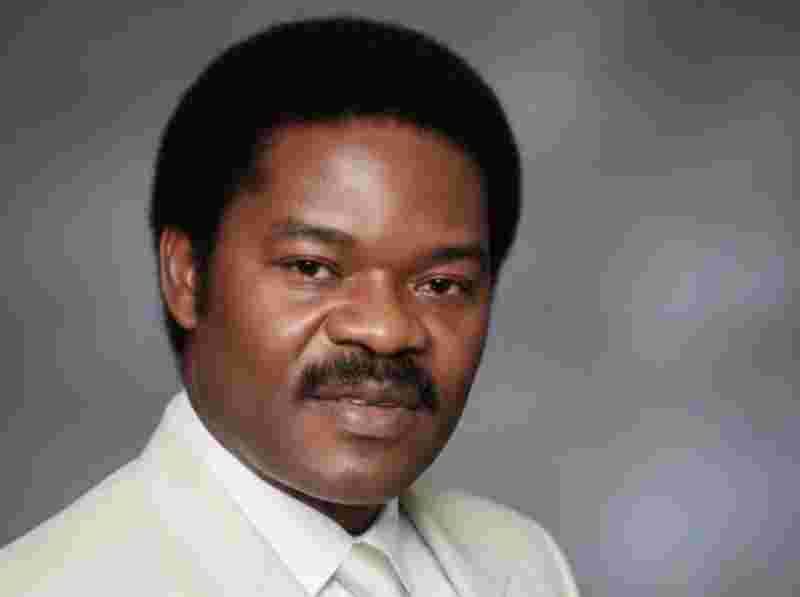
- Declare October 19 A National Day For Journalism And Press Freedom
(A NewsLeader Daily Editorial, Thursday, October 19, 2026)
On Sunday, October 19, 1986, Nigeria lost one of its most brilliant, courageous and influential journalists. Oladele Sunmonu Giwa, popularly known as Dele Giwa, was assassinated at his Lagos home by a parcel bomb at the age of 39.
Forty years later, the circumstances surrounding his death remain unresolved.
His death is not merely a tragedy for the Giwa family, it is a troubling chapter in Nigeria's national history. It is also an enduring reminder of the price journalists have sometimes paid for practising their profession in defence of truth, accountability and the public interest.
As Nigeria marks the 40th anniversary of that terrible Sunday, NIGERIAN NEWSLEADER Newspaper believes that the Federal Government should finally confer a posthumous national honour on Dele Giwa.
This is neither a request for charity, nor should it be interpreted as a favour to the journalism profession. It is a question of national memory and recognition.
Nigeria has an established national honours system designed to recognise citizens who have contributed to the development and progress of the country and to distinguished achievement in the various fields of endeavour. The system includes the Order of the Federal Republic and the Order of the Niger, with ranks ranging from MFR and MON to OFR, OON, CFR and CON, among others.
Dele Giwa's contribution falls squarely within the purpose of that system. He was a journalist who changed Nigerian journalism.
Giwa was not simply a newspaper writer.
He was an editor, columnist, newsroom innovator, publisher and one of the principal figures responsible for changing the character of Nigerian journalism in the 1970s and 1980s.
His professional journey included work with the old Nigerian Broadcasting Corporation (NBC) Ibadan, the New York Times, Daily Times and Concord newspapers before he became a shareholding director and Editor-in-Chief and Chief Executive Officer of the Newswatch magazine.
In 1984, he co-opted Messers Ray Ekpu, 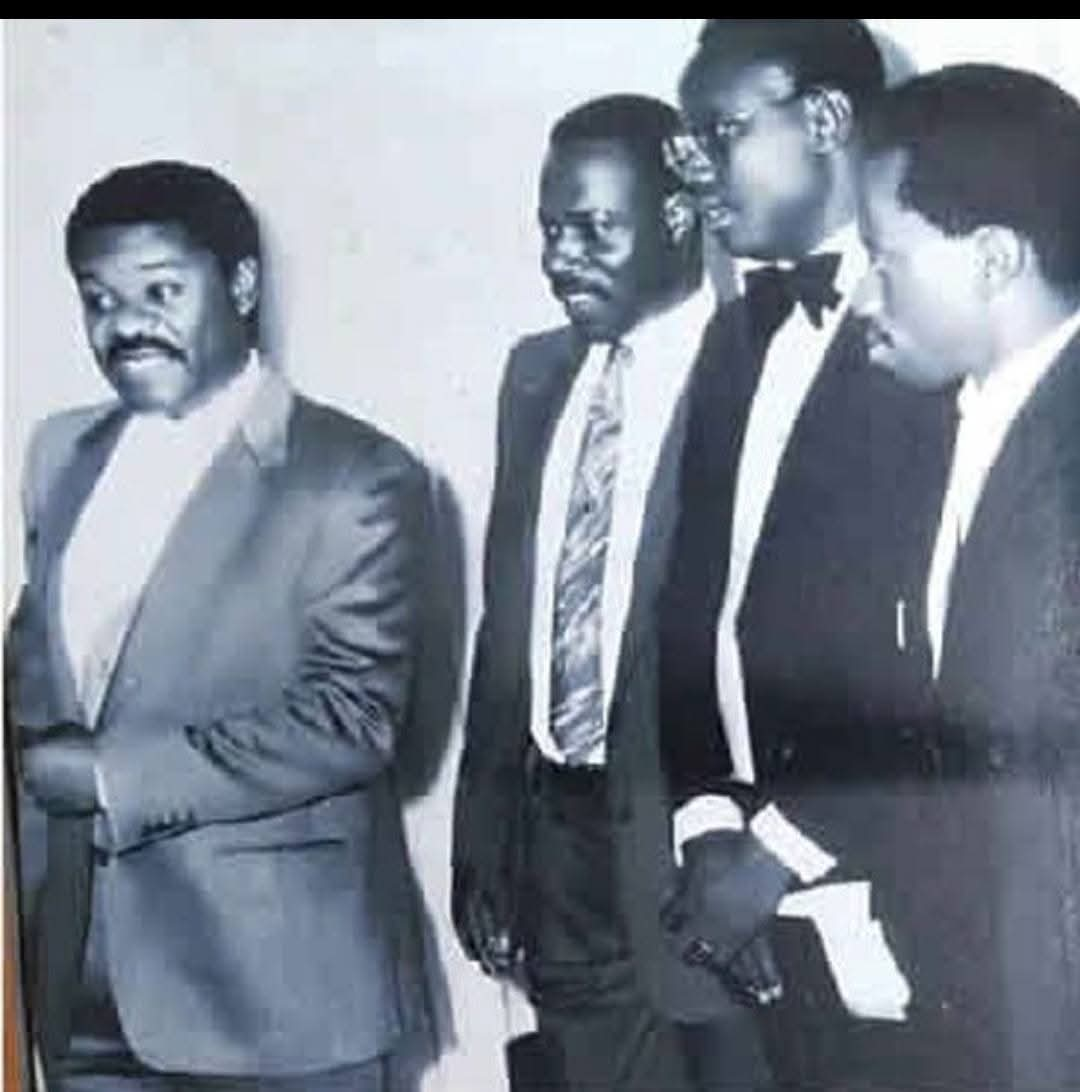 Dan Agbese and Yakubu Mohammed to establish Newswatch magazine, a news publication that subsequently became one of the most influential news magazines in Nigeria. His journalism was distinguished by vigorous writing, investigative curiosity, political analysis and an insistence that journalism should engage power rather than merely report its activities.
His celebrated column, “Parallax Snaps,” became a significant part of his journalistic identity. He produced hundreds of thought-provoking articles dealing with Nigeria's politics, economy, society, governance and national problems.
The significance of Giwa therefore goes beyond the number of articles he wrote.
He belonged to a generation of journalists who believed that the newspaper and magazine could become instruments of public enlightenment, democratic accountability and national development.
That is why his death continues to resonate.
He died, but the questions did not. The most painful aspect of the Giwa tragedy is not simply that a brilliant journalist was killed.
It is that Nigeria has never conclusively established who sent the bomb? Who authorised the killing? Who supplied the device and why the murder was committed?
The assassination occurred two days after Giwa had been interviewed by officials of the then State Security Service (SSS) now DSS (Department of State Services), a circumstance that immediately generated enormous public concern and controversy. Yet decades later, there has been no conviction for the killing. That unresolved mystery has become part of Nigeria's history.
At the 30th anniversary of his death in 2016, journalists, lawyers, human-rights activists and other stakeholders renewed demands for the case to be reopened and simultaneously called for a posthumous national honour for Giwa. The fact that the call has been repeated for years without the honour being granted makes the matter even more compelling.
A national honour would not substitute for justice, and neither would it close the murder investigation. It would not answer the question: Who killed Dele Giwa? But it would affirm that Nigeria remembers the journalist and recognises the value of what he contributed to the country.
The media must not wait for the government.
The Nigerian media establishment also has unfinished business. The Nigeria Union of Journalists (NUJ), the Nigerian Guild of Editors (NGE), the Newspaper Proprietors' Association of Nigeria (NPAN), and other professional bodies have participated at different times in commemorative activities surrounding Giwa.
For instance, the Lagos State Council of the NUJ organised a colloquium on October 19, 2016, to mark the 30th anniversary of his death. The event focused on journalist safety and the culture of impunity and renewed calls for investigation of his assassination.
There have also been memorial lectures, publications and other efforts to preserve his intellectual legacy. Books and archival projects have continued to document his life and writings. His former colleagues have also worked to preserve his articles and recollections for future generations. But these efforts have not yet produced the kind of permanent institutional remembrance that Giwa's contribution deserves.
Indeed, in 2023, Giwa's brother, Tunde Giwa, publicly appealed to the NUJ, NGE and NPAN to do more to immortalise him, lamenting that younger journalism students might grow up without knowing who Dele Giwa was. That warning should not be ignored. A nation that forgets those who helped shape its democratic institutions risks losing the historical memory necessary to defend those institutions.
One of the challenges before us now is to ensure that October 19 should become Dele Giwa Day. We therefore urge the NUJ and NGE to jointly designate October 19 every year as Dele Giwa Day for Nigerian journalism.
Such a day should not be reduced to the laying of wreaths or the publication of anniversary photographs. It should become an annual national conversation about journalism, democracy, public accountability and the safety of journalists.
The programme could include a Dele Giwa Memorial Lecture on the state of Nigerian journalism, democracy and freedom of expression or an annual Dele Giwa Investigative Journalism Prize for the journalist, or media organisation that produces outstanding public-interest investigative journalism. It could also be a Young Journalists' Essay Competition in universities and journalism schools, requiring students to examine Giwa's journalism and its relevance to contemporary Nigeria or even an annual review of unresolved attacks on journalists, including killings, disappearances, unlawful detention, intimidation and destruction of media property.
It could also take the form of a public exhibition and digital archive of Giwa's writings, making his major articles available to students, researchers and journalists; a national dialogue involving government, security agencies, lawyers, editors, journalists, academics and civil-society organisations on journalist safety and press freedom, and most importantly, the day should continue to ask the question that has remained unanswered for four decades: Who killed Dele Giwa?
The honour that Dele Giwa should receive should not be a difficult answer! The Federal Government should not merely give Giwa an obscure or routine recognition. The honour should reflect the national significance of his contribution. The present national honours system contains both the Order of the Federal Republic and Order of the Niger. In determining the appropriate category, government should consider the precedent established by recent national honours.
In June 2025, President Bola Ahmed Tinubu conferred national honours on a large group of journalists and democracy advocates. Prof. Wole Soyinka received GCON; Prof. Olatunji Dare received CON; Bayo Onanuga received CON; Dapo Olorunyomi and Kunle Ajibade received OON, while other journalists and public-interest figures also received national recognition. The same exercise included posthumous honours for several Nigerians associated with democratic struggles. This precedent makes the case for Giwa even stronger.
Nigerian NewsLeader Newspaper's considered recommendation is that Dele Giwa should be considered for the Commander of the Federal Republic (CFR) or the least, the honours of Commander of the Order of the Niger (CON), posthumously.
This recommendation is based not on the tragedy of his death alone, but on the breadth and national impact of his professional contribution. Dele Giwa helped transform journalism and helped establish the respected Newswatch magazine. The media legend demonstrated the capacity of the Nigerian press to investigate powerful institutions. He used journalism to interrogate political and social problems.
And his death became one of the most disturbing attacks on the Nigerian press.
If the federal government of Nigeria considers that the highest rank appropriate to his circumstances should instead be OON or another category under the National Honours framework, that should not become an excuse for indefinite delay. The essential point is that his contribution should receive formal national recognition. The honour must also include institutional remembrance.
There is another important dimension to this call. The Federal Government should consider establishing a Dele Giwa National Centre for Journalism, Media Research and Press Freedom, preferably through an appropriate university or national institution. Such a centre could preserve his writings, conduct research into Nigerian journalism, train young investigative journalists, document attacks on the press and maintain an archive of Nigerian media history.
Indeed, as far back as 2015, there were public calls for government to establish a journalism school in Giwa's honour because of his contribution to Nigerian democracy and journalism. The proposal deserves renewed consideration. The country does not need another monument that nobody visits.
What it needs is an institution that produces journalists, preserves knowledge and strengthens the principles for which Giwa's generation fought.
As a nation that appreciates and cares, we must honour the dead but pursue justice.
There is, however, one important condition.
Any national honour for Dele Giwa must not become a convenient substitute for justice.
The government can honour him and still reopen the investigation into his assassination. Indeed, the two responsibilities should proceed together.
A nation cannot convincingly celebrate a journalist killed by a parcel bomb while remaining indifferent to the unanswered circumstances of his murder. The continued mystery surrounding the case has been described repeatedly by journalists and human-rights advocates as a symbol of impunity.
Therefore, as today, Monday, October 19, 2026 marks 40 years of his gruesome assassination, the Federal Government should establish whether existing records, security files, police investigations and relevant archival materials can be reviewed lawfully and professionally to determine whether fresh evidence exists.
The allegation made by former police investigator on Giwa's murder case, late Police Commissioner Abubakar Tsav during one his interviews with Nigerian NewsLeader Newspaper in Abuja, that the case file on Giwa was retrieved from him, should be immediately and thoroughly investigated and promptly recovered from wherever it was kept or hidden by the Inspector General of Police, IGP Olatunji Disu.
Nigerian NewsLeader is of the reasoned view that on Dele Giwa's matter, no individual should be prejudged, and no institution should be condemned without evidence. But no serious country should allow a historic murder of such magnitude to disappear into the dust of history without sustained efforts to establish the truth.
As a journalist, and well-heeled one for that matter, Dele Giwa belongs to Nigeria. He was more than a journalist. Giwa became part of the Nigerian story. And his writings reflected the anxieties of a country struggling with military rule, economic uncertainty, political instability and the search for democratic renewal. His colleagues fearlessly continued with the publication of Newswatch magazine after his death, demonstrating that the murder of its founding editor (Dele Giwa) did not extinguish the journalistic project he helped establish. Recent accounts by his colleagues continue to describe his influence on the development of Nigerian journalism.
Forty years is long enough for a nation to remember, and it is also long enough for a government to acknowledge Giwa's contribution. The period is indeed long enough for the media profession to institutionalise remembrance in his memory. It is certainly long enough too to ask again why the killing of one of Nigeria's most prominent journalists remains unresolved.
Therefore, Nigerian NewsLeader Newspaper calls on the Federal Government headed by President Bola Ahmed Tinubu, a media proprietor himself and supposedly one of the most media friend president that the nation ever had, to immediately consider conferring a well deserved posthumous national honour on Dele Giwa and to give serious consideration to the rank of Commander of the Federal Republic (CFR) or the least, as we have earlier suggested, a Commander of the Order of the Niger (CON).
This newspaper also calls on the umbrella organisation of the media in Nigeria: the Nigerian Union of Journalists (NUJ), and also the Nigerian Guild of Editors (NGE), the Guild of Corporate Online Publishers (GOCOP), the Newspaper Proprietors Association (NPAN) and the Broadcasting Organisation of Nigeria, BON (considering that Dele Giwa was also a former broadcast journalist with the NBC, Ibadan in the 70s) to establish October 19 every year as Dele Giwa Day, in partnership with other media organisations and journalism institutions.
Let that day not only become a day of remembrance, but a day of scholarship and of investigative journalism; a day of press-freedom advocacy and a day of reflection on the responsibility of the Nigerian media to the nation.
Also, let that October 19 day carry two messages, which are that we must never forget Dele Giwa and never stop asking who killed him. Yes, a national honour cannot bring Dele Giwa back, but it can tell generations of Nigerians that the country remembers what he stood for. Perhaps, in honouring his memory, Nigeria will also renew its commitment to the principle that the journalist's pen, however powerful, must never be answered with a bomb.
That would be an honour worthy, not only of Dele Giwa, but of Nigeria itself! NNL.