- Calls For Abolition of Onshore/offshore Dichotomy, Urgent Ogoni Clean-up, Development of South-South Seaports, Modular Refineries
By Celestine Okafor (Editor-in-chief)
The Pan Niger Delta Forum (PANDEF) has called for an increase in the oil derivation allocation to oil-producing states from the current minimum of 13 per cent to 50 per cent, arguing that the existing arrangement is inadequate to address the enormous environmental, economic and developmental challenges confronting the Niger Delta.
The organisation also called for the urgent abolition of the onshore/offshore dichotomy in revenue allocation, insisting that coastal communities suffer the environmental and economic consequences of offshore oil exploration just as communities hosting onshore petroleum operations.
These were among the major resolutions reached at a joint meeting of PANDEF's Board of Trustees and National Executive Committee held in Abuja and virtually on Tuesday, October 27, 2026.
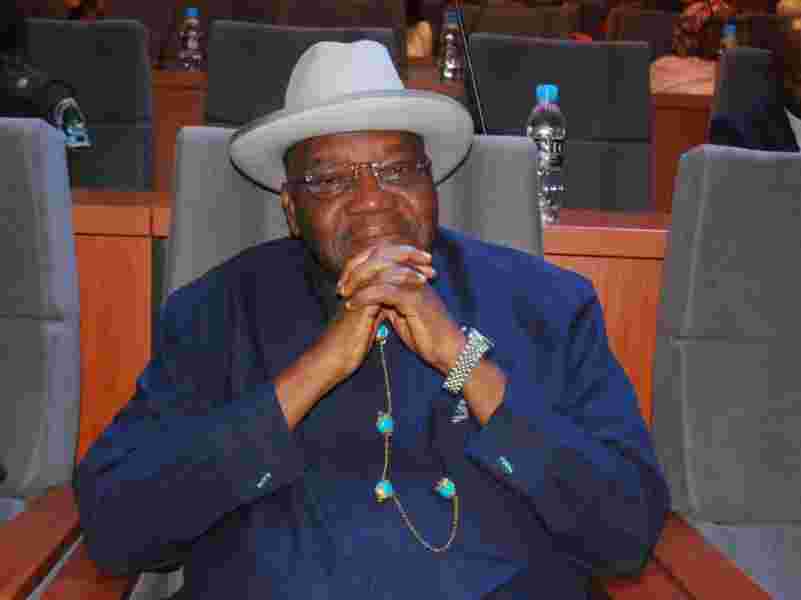
The meeting, attended by the Chairman of the Board of Trustees, former Akwa Ibom State Governor, Obong Victor Attah, and the National Chairman, Ambassador Dr. Godknows Boladei Igali, brought together former governors, former ministers, traditional rulers, political leaders, opinion leaders and other stakeholders representing the six South-South states of Akwa Ibom, Bayelsa, Cross River, Delta, Edo and Rivers.
In a communiqué issued at the end of the meeting and signed by Attah and Igali, PANDEF maintained that the current 13 per cent derivation allocation, provided for under Section 162(2) of the 1999 Constitution, had remained unchanged for more than two decades despite the environmental degradation, health hazards and developmental difficulties associated with oil and gas exploration in the region.
The organisation therefore urged the Federal Government, the Revenue Mobilisation, Allocation and Fiscal Commission (RMAFC) and the National Assembly to urgently address the matter through appropriate constitutional and legislative measures.
On the controversial onshore/offshore dichotomy, PANDEF argued that offshore petroleum operations take place within the maritime environment and fishing grounds upon which coastal communities depend for their livelihoods.
It noted that oil spills and other incidents arising from offshore exploration could devastate marine ecosystems, fishing activities and the economic wellbeing of coastal populations, regardless of whether the affected petroleum resources were located onshore or offshore.
PANDEF also renewed its demand for urgent environmental remediation across the Niger Delta, declaring that environmental protection and restoration would remain at the forefront of its engagement with the Federal Government.
The organisation observed that more than six decades of oil and gas exploration had left several communities battling pollution, environmental degradation and the destruction of their natural ecosystems and traditional livelihoods.
It specifically identified Nembe Creek in Bayelsa State, Odidi in Delta State and Kula in Rivers State as communities requiring urgent environmental intervention.
The forum called for adequate, sustained and transparent funding of the Ogoni clean-up programme and urged the Federal Government to develop a comprehensive framework for extending similar remediation efforts to other polluted communities across the Niger Delta.
Significantly, PANDEF called on presidential candidates of all political parties contesting the 2027 general elections to demonstrate their commitment to environmental justice by presenting practical, measurable and time-bound programmes for cleaning up and restoring affected communities.
On infrastructure, the organisation welcomed the Federal Government's decision to retain the original broad alignment of the 750-kilometre Lagos-Calabar Coastal Highway as a distinct strategic national project.
It recalled that the proposed highway had a long historical background, predating Nigeria's independence, and had featured prominently in discussions about the development and economic integration of coastal communities in the Niger Delta.
The forum disclosed that it had resolved to establish a high-level technical committee to assist the Federal Ministry of Works in advancing the project.
According to PANDEF, previous design work undertaken by the Oil Minerals Producing Areas Development Commission (OMPADEC) and the Niger Delta Development Commission (NDDC), alongside contributions from relevant professionals from the region, could provide useful technical support for the project.
The organisation, however, insisted that the Lagos-Calabar Coastal Highway must be successfully completed and implemented alongside the East-West Road and the rehabilitation of other dilapidated roads across the region.
It maintained that the coastal highway would improve connectivity among coastal states, stimulate trade and investment, strengthen national integration and unlock opportunities in the blue and marine economy.
PANDEF also called on the Federal Government to establish appropriate north-south rail connections linking the Niger Delta with other parts of the country.
The forum commended President Bola Tinubu's decision to modernise and upgrade the ports of Warri, Port Harcourt and Calabar.
It equally welcomed approvals for proposed deep-sea port projects, including the Ibom Deep Sea Port in Akwa Ibom, Bonny Deep Sea Port in Rivers and Agge Deep Sea Port in Bayelsa State.
According to the organisation, the strategic geographical location of the South-South ports could strengthen Nigeria's trade connections with East, Central and Southern Africa while improving access to international maritime routes and expanding the country's opportunities under the African Continental Free Trade Area (AfCFTA).
PANDEF, however, urged the Federal Government to establish sustainable financing arrangements for the development of the ports, comparable to those adopted for major port infrastructure projects around the Lagos corridor.
It argued that the South-South should not be denied the economic opportunities associated with its strategic maritime location.
On the region's enormous natural gas resources, PANDEF called for accelerated investment in gas infrastructure and gas-based industries, noting that the Niger Delta holds more than 209 trillion standard cubic feet of natural gas reserves.
It identified power generation, mini-liquefied natural gas (LNG) facilities, liquefied petroleum gas (LPG), compressed natural gas (CNG) hubs, petrochemicals and other value-added industries as critical areas requiring investment.
The organisation maintained that developing the gas sector would promote industrialisation, improve electricity supply, generate employment and strengthen Nigeria's economic competitiveness.
It also called for renewed Federal Government commitment to modular refinery development, recalling that the initiative formed part of its economic engagement with the administration of former President Muhammadu Buhari between 2016 and 2017.
PANDEF proposed the establishment of an appropriate framework for financing, licensing, technical support and environmental compliance to ensure the sustainability of modular refineries.
It explained that modular refineries would complement existing and proposed large-scale refining facilities, including the Dangote Refinery, Port Harcourt Refinery, Warri Refinery and Kaduna Refinery.
According to the forum, a properly regulated modular refining industry would reduce dependence on imported petroleum products, encourage local entrepreneurship, create employment and stimulate supporting industries across the Niger Delta.
Recognising the need to diversify the region's economy, PANDEF identified agriculture as one of the most promising alternatives to excessive dependence on oil and gas revenues.
It noted that the Niger Delta's favourable rainfall, water resources, ecological diversity and agricultural potential provided opportunities for developing several agricultural value chains.
Among the priority areas identified were palm oil, rice, cassava, vegetables, horticultural products and other crops suitable for the region.
The forum urged the Federal Government and the six South-South state governments to formulate and implement a coordinated agricultural development programme.
Such a programme, it said, should prioritise improved seedlings, mechanisation, irrigation and water management, rural roads, storage facilities, agro-processing industries, affordable financing, extension services and reliable markets for farmers.
PANDEF maintained that agriculture should become a central pillar of the Niger Delta's economic diversification strategy.
In another major initiative, the organisation disclosed plans to explore the establishment of a regional investment fund to mobilise resources from individuals, businesses, institutions and other stakeholders within and outside the South-South.
The proposed market-based fund would support investments in critical economic sectors, promote regional connectivity, encourage enterprise development, generate employment and stimulate sustainable economic growth.
The forum resolved to continue consultations with relevant stakeholders, particularly private-sector investors, towards developing a workable framework for the initiative.
The meeting also reviewed the organisation's achievements during its first decade, particularly its implementation of the 16-point agenda presented to former President Muhammadu Buhari on November 1, 2016.
PANDEF described itself as the umbrella socio-political organisation representing the collective aspirations of the South-South people and acknowledged its contributions to public advocacy, civic engagement and constructive dialogue with successive Federal Governments.
Among the achievements highlighted were the establishment of the South-South Development Commission, advocacy for greater participation of the region in the oil and gas industry, commencement of activities at the Nigerian Maritime University, Okerenkoko, Delta State, and the upgrading of the Maritime Academy of Nigeria, Oron, Akwa Ibom State.
Other areas included advocacy for infrastructural development, ports modernisation, local participation in the security of oil and gas assets and the promotion of peaceful coexistence among the various ethnic nationalities.
The organisation also commended its leadership for contributing to efforts to restore peace in Rivers State and continuing engagements towards resolving the dispute over oil wells between Akwa Ibom and Cross River states.
It further acknowledged ongoing efforts to improve inter-ethnic relations in Warri, Delta State.
The meeting paid special tribute to the founding fathers of PANDEF, who brought together various organisations representing the interests of the South-South under a common umbrella ten years ago.
Among those remembered were the late Chief Edwin Kiagbodo Clark, former Governor Air Commodore Idongesit Nkanga, who served as PANDEF's pioneer National Chairman, former Senate President Joseph Wayas, Chief Tony Anenih and Chief Tonye Graham Douglas.
The forum also honoured several traditional rulers, military officers, political leaders and other prominent personalities who contributed to the emergence and development of the organisation.
It recalled that the formation of PANDEF represented a continuation of earlier efforts at regional unity through movements such as the Calabar-Ogoja Rivers Movement and the Movement for the Creation of the Midwest during the First Republic.
As Nigeria approaches the 2027 general elections, PANDEF expressed concern over the state of the nation and stressed the need for peace, security, national cohesion and responsible governance.
It urged people of the South-South to exercise their civic responsibilities peacefully and vote according to their conscience.
The organisation advised voters to support candidates at all levels whose programmes, commitments and demonstrated capacities align with the aspirations of the region and can contribute meaningfully to the peace and development of the Niger Delta.
It also called on sons and daughters of the Niger Delta occupying public offices, particularly at the Federal Government level, to demonstrate greater commitment to PANDEF's activities and its efforts to unite the people and advance the interests of the region.
Reaffirming its commitment to constructive engagement with the Federal Government, the six state governments, traditional institutions, the private sector and other stakeholders, PANDEF declared that the development of the Niger Delta was inseparable from the development of Nigeria.
The forum urged relevant authorities to move beyond policy announcements and translate commitments and proposed projects into tangible benefits for the people.
NewsLeader editorial consideration: The most significant angle in this communiqué is PANDEF's demand for a 50 per cent derivation allocation. It is a major political and fiscal demand with implications for federal revenue distribution, constitutional reform and resource control. It deserves prominent treatment, as it could become an important issue in the political debate ahead of the 2027 elections. NNL.