
(A Nigerian NewsLeader Editorial, Saturday, October 24, 2026)
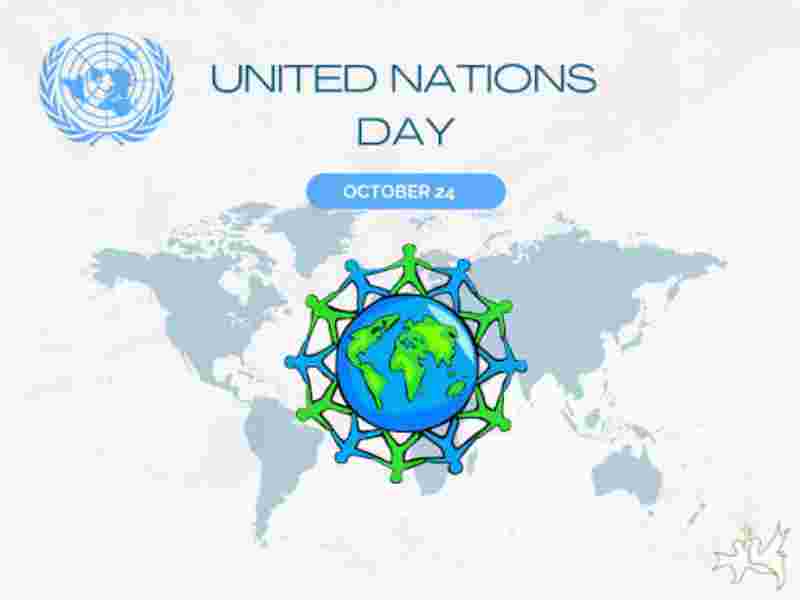
Today, Saturday, October 24, 2026, the world commemorates the annual United Nations World Development Information Day, an important international observance that draws attention to the relationship between information, public awareness, international cooperation and sustainable development.
The United Nations General Assembly, in 1972, established this event day through Resolution 3038 (XXVII). The observance of this day was designed to sensitise the global public to development challenges and demonstrate the importance of international cooperation in addressing those challenges. October 24 was therefore chosen because it coincides with United Nations Day and the anniversary of the adoption, in 1970, of the International Development Strategy for the Second United Nations Development Decade. The first observance took place in 1973.
More than five decades later, the central compelling message remains that development cannot be achieved through policies, funding and infrastructure alone. Citizens must have access to accurate, timely, understandable and useful information to make informed decisions and demand accountability, and participate meaningfully in shaping their societies.
For Nigeria, a country grappling with poverty, unemployment, insecurity, educational inequality, healthcare deficiencies and persistent infrastructure gaps, this important UN Day is more than another item on the international calendar. It should be an opportunity for serious reflection and practical action.
Development Information, however, matters a lot. This is because information is the lifeblood of development. Farmers need reliable weather forecasts, agricultural research and market prices. Also, students need access to educational resources and patients need accurate health information, just like entrepreneurs need dependable information about markets, regulations, finance and business opportunities. Even the citizens of a country need to know how public funds are allocated, what projects governments promise to deliver and whether those projects are completed. Without such information, development programmes can become exercises in waste, exclusion and political propaganda.
The United Nations, therefore, recognises that communicating development challenges effectively can mobilise public opinion, encourage young people to participate and strengthen international cooperation. Information and communication technologies also create opportunities to expand economic participation, improve access to knowledge and reduce social exclusion.
The significance of this day therefore extends beyond the circulation of information. It concerns the ability of people to obtain knowledge, understand their circumstances and use what they learn to improve their lives. It is a statement of facts, that information must be accessible, credible and actionable to produce meaningful development. A society flooded with rumours, propaganda, manipulated statistics and misleading digital content is not necessarily an informed society.
The current digital revolution seems to be excluded millions of people in the world. The expansion of the internet has transformed how people obtain information, conduct business, receive education and interact with government. Yet access to these opportunities remains deeply unequal.
According to the International Telecommunication Union's Facts and Figures 2025, approximately six billion people, representing three-quarters of the world's population, were using the internet in 2025. Nevertheless, 2.2 billion people remained offline, with the overwhelming majority living in low- and middle-income countries. The same report found that internet use reached 94 per cent of the population in high-income countries, compared with just 23 per cent in low-income narions. Internet use also differed significantly between urban and rural populations, standing at 85 per cent and 58 per cent respectively.
These figures expose a troubling contradiction. While technological advances are creating extraordinary opportunities, millions of people remain excluded from the information revolution because of poverty, inadequate infrastructure, high connectivity costs, limited digital skills and geographical isolation. Nigeria is typically a country that illustrates this challenge.
The International Telecommunication Union data indicate that approximately 41.2 per cent of Nigerians used the internet in 2024. Its country dashboard also reported that only 2.39 per cent of rural households and 18 per cent of urban households had internet access at home in 2017, the latest household figures displayed in that series. These household figures are dated and should not be mistaken for current access rates, but they demonstrate the historical depth of Nigeria's urban-rural digital divide.
The implication is clear, that owning a mobile telephone or living within the coverage area of a telecommunications network does not automatically guarantee meaningful access to information.
Millions of Nigerians still face challenges involving data affordability, unreliable electricity, poor network quality, limited digital literacy and inadequate connectivity in rural communities. The Federal and State Governments have a responsibility to treat digital inclusion as an essential component of national development rather than a luxury reserved for the affluent urban populations.
Development information is also indispensable to democracy. Citizens cannot hold public officials accountable if they do not know how much money has been budgeted for their communities and which contractors received public contracts and how projects are progressing or what results government policies are producing. Therefore, transparent access to public information strengthens participation and helps expose corruption, abandoned projects, financial irregularities and abuse of office.
In Nigeria, government institutions should proactively publish accessible budget documents, procurement records, audited accounts, project locations, implementation timelines and measurable performance indicators. Information should be presented in formats that ordinary citizens can understand, not buried in technical documents or inaccessible websites.
Public institutions should also recognise that communicating government activities is not the same as providing development information. Publicity celebrates what authorities claim to have achieved. Also, credible development information enables citizens to independently examine the evidence. There is need for government communication to inform rather than manipulate. It should explain, not intimidate people. It should also invite scrutiny rather than demand unquestioning acceptance.
The Freedom of Information Act 2011 provides an important framework for access to public records. Its promise, however, depends on implementation, institutional compliance and citizens' practical ability to obtain the information they need.
The World Development Information Day has a direct and important relationship with journalism. The media has a critical responsibility. Newspapers, radio, television, news agencies and digital publications remain essential channels through which development information reaches the public. Journalist's professional duty is to explain government policies to the mass audience, to investigate public expenditure, examine social inequalities and give visibility to communities whose challenges might otherwise remain ignored.
The media should therefore move beyond event-driven reporting and official press releases to more sustained, evidence-based development journalism. For instance, reporting a government's announcement of a new hospital is not sufficient. Journalists should investigate whether the facility has been completed, whether it is staffed, whether essential medicines and equipment are available and whether ordinary people can afford its services.
Similarly, reporting a new agricultural intervention should include questions about the number of farmers reached, the distribution of inputs, the programme's cost and its actual effects on productivity and household incomes. This is the journalism that helps citizens distinguish announcements from achievements.
However, the media also faces serious challenges. These challenges range from financial pressures, political interference, inadequate investigative resources, misinformation, disinformation and the rapid spread of unverified material on social media which threaten the quality of public information. The growing use of artificial intelligence creates additional opportunities for research and communication but also increases the potential for fabricated images, deceptive audio, manipulated videos and convincing falsehoods.
Journalists, therefore, should strengthen their verification efforts, protect editorial independence, disclose relevant conflicts of interest and correct errors promptly. News organisations should also invest in data journalism, investigative reporting, fact-checking and the training of reporters to interpret statistics accurately. Media literacy should also become a public priority. Citizens need the skills to identify trustworthy sources, distinguish fact from opinion and question sensational claims before sharing them.
Importantly, the United Nations' Global Media and Information Literacy Week also begins today and runs until October 31. Its 2026 theme is “We All Play a Part – Media and Information Literacy for the People.” Although this is the theme of the related media-literacy observance, rather than a separately announced annual theme for World Development Information Day, it reinforces today's central message that everyone has a responsibility to promote an informed society.
The Nigerian NewsLeader Newspaper believes that commemorating this UN Day without commitments would defeat its purpose. The Federal Government of Nigeria should, first, develop a coordinated national strategy for development information, bringing together relevant ministries, the National Bureau of Statistics (NBS), the Nigerian Communications Commission (NCC), educational institutions, research organisations and the media.
Telecommunications companies and regulators should also intensify efforts to extend affordable, reliable broadband services to rural communities, underserved regions, schools, healthcare facilities and public libraries. Infrastructure expansion should be accompanied by affordable data packages and improved network quality. The
government agencies should publish reliable, regularly updated statistics on poverty, employment, education, healthcare, agriculture and infrastructure. Such information should be available in accessible digital formats and, where appropriate, in Nigerian languages.
The federal, state and local governments should endeavour to establish or strengthen public information centres, community libraries and digital learning facilities, especially in underserved areas. Digital literacy programmes should target women, young people, persons with disabilities, rural residents and other groups at risk of exclusion. The National Orientation Agency (NOA), the schools, universities, civil society organisations and media bodies, should intensify public education against misinformation and promote responsible digital citizenship.
The United Nations and it's development agencies, the World Bank, the International Telecommunication Union (ITU) and other international partners should strengthen assistance to developing countries through technology transfer, research partnerships, capacity building and support for affordable digital infrastructure. In addition, International cooperation should go beyond declarations and produce tangible improvements in connectivity, access to knowledge, public accountability and people's living standards.
NIGERIAN NEWSLEADER'S POSITION
The Nigerian NewsLeader Newspaper maintains that access to reliable information is both a development necessity and an instrument of democratic empowerment.
We therefore call on the Federal Government to make information access a central pillar of national development planning and to ensure that digital transformation benefits ordinary Nigerians rather than a privileged minority. We also enjoin the state and local governments to publish verifiable information about their budgets, projects and service-delivery outcomes, while providing practical channels through which citizens can ask questions and report failures.
We also call on media organisations to make development journalism a sustained editorial priority. The press must investigate the real conditions of schools, hospitals, roads, agricultural communities and public utilities instead of merely reproducing official claims.
The United Nations and international development institutions should, for their part, intensify efforts to close the digital divide and ensure that poorer nations have the infrastructure, technical knowledge and financial support required to participate meaningfully in the global information economy.
Above all, the public must learn to value evidence, verify claims and reject the deliberate spread of false information. The UN's World Development Information Day should learn to move beyond event commemoration to action.
As the world marks World Development Information Day, we must remember that information is not development in itself. Its true value lies in how it enables people and institutions to make better decisions, solve problems and improve human welfare. A connected society in which citizens cannot afford data and rural communities remain excluded and journalists are denied access to public records, and governments also conceal information, is not a fully informed society.
Nigeria, therefore, must close the distance between information and opportunity, technology and inclusion, public promises and visible results. The ultimate test of today's observance is not the number of speeches delivered or statements issued but whether more citizens gain access to trustworthy information and public institutions become more transparent or the media becomes better equipped to hold power accountable and whether information helps improve the everyday lives of ordinary people.
The fact is that development begins when people know what is happening, understand what is possible and possess the information necessary to demand and achieve a better future. NNL.