
(A Nigerian NewsLeader Editorial, Thursday, October 22, 2026)
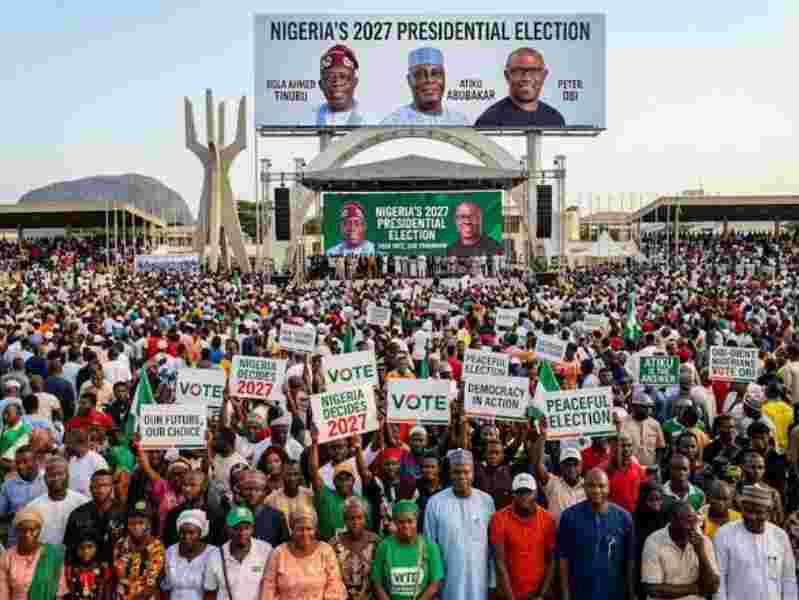
As political parties and their candidates begin preparations for the 2027 general elections, Nigeria stands at another critical crossroads in its democratic journey.
Election campaigns should ordinarily provide an opportunity for citizens to examine competing ideas, assess the records of those seeking public office and determine who possesses the competence, character and vision to lead the country. Unfortunately, Nigerian political campaigns have too often degenerated into personality contests, extravagant rallies, abusive exchanges, ethnic and religious mobilisation, vote-buying and promises that disappear after elections.
The commencement of campaigns must therefore mark a departure from these familiar failings. Nigeria needs campaigns that address the country's problems and offer credible solutions, rather than spectacles designed primarily to advance the ambitions of individual politicians.
For millions of Nigerians struggling with rising costs of living, unemployment, insecurity, poor electricity supply, inadequate healthcare and declining purchasing power, the key issue is not which politician can attract the largest crowd. It is which candidate understands their predicament and possesses a practical, measurable and achievable programme for addressing it.
The Nigerian electorates demand more than promises. This means that candidates should explain how they intend to create jobs, improve education, strengthen national security, reduce poverty, revive agriculture, expand electricity generation and distribution, and restore confidence in public institutions. They must also explain how their manifesto proposals will be financed, how long implementation will take and how citizens can hold them accountable.
The electorates equally want to examine the records of incumbent office holders. Those seeking re-election should be assessed on their current performance, not merely on the strength of their political machinery, party affiliations or access to public resources. Opposition candidates, too, should strive to demonstrate that they really possess the competence and integrity to govern. Nigeria cannot afford another election in which citizens are persuaded by slogans and extravagant promises without demanding evidence of capacity and credibility.
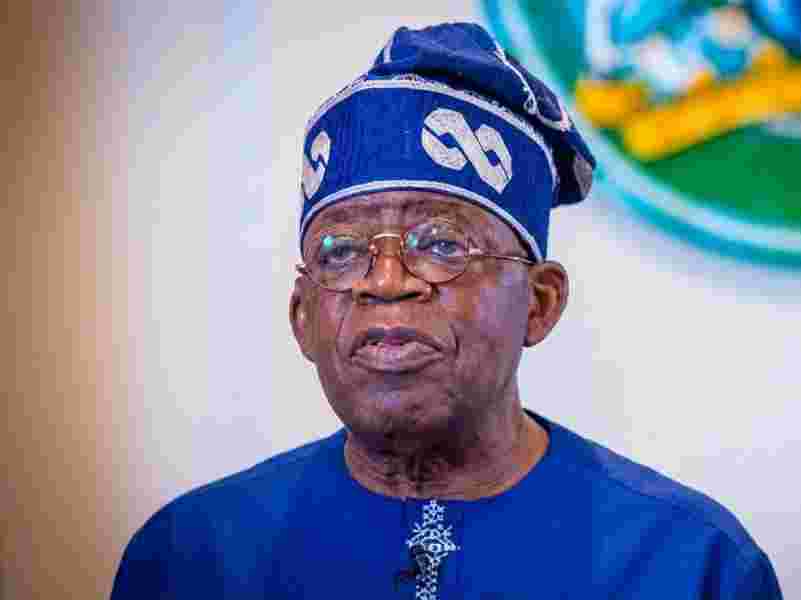
President Bola Ahmed Tinubu's reported indication that he would campaign in only a few states because of the enormity of the work of governance raises an important question about the relationship between official responsibilities and partisan political activities. The president's primary responsibility remains the governance of Nigeria. If the demands of his office genuinely restrict his ability to undertake extensive nationwide campaigning, his administration must ensure that essential government responsibilities do not suffer.
At the same time, the electorate deserves a clear understanding of his administration's performance and plans for the remainder of its tenure. The president's ruling political party, the All Progressives Congress (APC) and other political organisations should also recognise that the popularity of a candidate cannot be established simply through the number of rallies attended or the geographical spread of campaign appearances. Modern campaigning increasingly relies on direct engagement with voters, policy debates, accessible manifestoes and credible communication.
However, the president's position should not become an excuse for other political parties to avoid presenting their programmes to Nigerians. Every candidate seeking the highest office in the land should demonstrate a willingness to engage citizens across the country's diverse regions, whether physically or through credible and accessible communication platforms. Political parties must change the character of their campaigns.
The Independent National Electoral Commission (INEC), the nation's security agencies, the judiciary, civil society organisations and the media, all have important responsibilities in ensuring that the electoral process remains peaceful, transparent and credible. Political parties, in particular, should respect the Electoral Act and other applicable campaign regulations. They should discourage hate speech, intimidation, political violence, vote-buying and the use of public resources for partisan advantage. Their supporters must understand that political disagreement is not a licence to threaten, attack or dehumanise opponents.
Election candidates should also stop presenting opponents as enemies of the state. Democracy thrives on competition, disagreement and the peaceful transfer of power. A politician who cannot tolerate criticism or accept legitimate competition has demonstrated a troubling attitude towards democratic governance.
The Nigerian media, for its part, should resist becoming an instrument of political propaganda. Journalists should interrogate manifestoes, investigate allegations, fact-check campaign claims and provide citizens with balanced information. There is need for vigilance by media organizations against disinformation, manipulated videos and fabricated stories capable of misleading voters or provoking violence.
And as the election campaigns begins, there is a need for Nigeria political actors and their political parties to learn from the experiences of other advanced and advancing democracies so as to get it right this time. Those democratic experiences of other developed democracies from elsewhere should offer useful lessons to us.
In advanced democracies like the United States, for instance, presidential debates and scrutiny of candidate's records provide opportunities for voters to compare competing positions, even though its electoral system also faces serious challenges.
But it is rather disappointing that nobody, no political party or presidential candidate and no election monitoring body is talking about a presidential debate this season. The debate offers opportunity for the contestants, especially those vying for the highest office in the land to be scrutinized by the electorates who they are seeking their votes.
The United Kingdom's political culture offers examples of parliamentary scrutiny and public interrogation of policy proposals. Same as India, with its enormous electorate and complex political environment, demonstrates the logistical possibilities and difficulties of conducting elections on a massive scale.
Nigerian NewsLeader Newspaper is not advocating that Nigeria, therefore, should copy any foreign electoral system blindly, rather, it is of the view that the country should adopt practices that strengthen accountability, transparency, issue-based campaigning and the peaceful resolution of political disputes.
The National Peace Committee, civil society groups and religious and traditional leaders should intensify efforts to secure commitments from candidates against violence and inflammatory rhetoric. Such commitments, however, should go beyond ceremonial signatures. Violations of such peace accord should attract public condemnation and appropriate legal consequences.
The nation's electoral umpire, INEC, should strive to maintain its statutory neutrality and impartiality in this very general elections. The unfortunate and ugly occurrences of the 2023 general elections must not repeat itself in the interest of the corporate unity and democratic advancement of the country.
The promises and repeated assurances to the nation and to the watching global community by the Chairman of the Independent National Electoral Commission (INEC), Professor Joash Amupitan during the last 2026 editions of the annual conferences of the Nigerian Guild of Editors (NGE) and the Guild of Corporate Online Publishers (GOCOP) on Thursday, September 24th in Enugu and on October 8th in Lagos, that INEC would conduct a credible and transparent election in 2027, must be observed by the Commission to the hilt.
The coming elections from Saturday January 16, 2027 is one rare, golden opportunity by INEC under Professor Amupitan to redeem it's unfavourable or negative public image, and for the INEC boss, in particular, to write his name in gold for history and generations of Nigerians to remember him. The Commission must not pander to any candidate or political party, no matter the level of pressure, intimidation or blackmail to subvert the will of the people as expressed at polling units.
And INEC also should demonstrate its readiness to enforce electoral rules without fear or favour. The Commission should not accept polling result figures from any source not properly authenticated in line with voter's desire. INEC must patriotically and vigorously resist any black market result sheet from anti-democracy sources and professional election riggers who wants to cheat their way to power.
After 27 solid years of democratic experimentation since May 29, 1999, Nigeria's democracy should finally rise up from it's crutches and walk gallantly and proudly, like an infirm who has suddenly received a spiritual healing! Whoever wins, should be so declared by INEC, in the spirit of democracy, and the presidential winner should run an inclusive government of national unity! Party platforms are wholly irrelevant in the present national consideration.
In the same vain, the political parties and their candidates should realise that losing an election in a particularly season is not a political crucification or final death, but a temporary electoral misfortune that can be reversed in the next election season after doing the needful to enable a political rebound.
The nation's security agencies have a patriotic responsibility to fairly and equally protect all election candidates and voters, while the judiciary (the main problem of the country in this circumstance, and the judicial umpire that counts, in the courtroom, the votes nobody cast) must dispense electoral justice fairly, wisely and without unnecessary delays. The judiciary must also properly caution itself against indulging in reckless and compromise rulings or judicial pronouncements on post-election petitions, considering that their landmark verdicts constitute case laws that are often cited in future by litigants and their attorneys, and the inferior courts themselves.
The credibility of the 2027 elections will also depend on the conduct of the electorates. Citizens must reject inducements of any kind to sell their votes and compromise their future. They should verify information before sharing it, especially on social media, and they should also resist attempts to manipulate their ethnic, religious or regional loyalties for political gain. Voters should remember that the consequences of a poor electoral choice are borne by the entire country long after campaign posters have been removed.
Young Nigerians, who constitute a significant part of the electorates, deserve particular attention. They should be encouraged to participate peacefully and question candidates, and also organise around issues that affect their future. Their political participation must not be reduced to providing crowds, online attacks or serve as foot soldiers for competing political interests.
Nigerian NewsLeader newspaper ultimately believes that the 2027 election campaigns should be judged by the quality of ideas they generate, the honesty of the promises they make and the peaceful democratic culture they promote.
The country requires leaders who understand that public office is a responsibility, not a private entitlement, and that political power is entrusted by citizens. Leaders also should understand that public office is not permanently owned by any individual or party, and that winning an election is only the beginning of the obligation to govern responsibly.
The 2027 campaigns must therefore be about Nigeria, her economy, security, education, healthcare, infrastructure, democratic institutions and the future of its people. Politicians should strive to present credible programmes. The citizens themselves should consistently demand accountability, and electoral institutions must demonstrate impartiality. Anything less would represent another missed opportunity to deepen our democracy.
Nigeria deserves campaigns that enlighten rather than deceive the voters. The country looks forward to campaigns that unite rather than divide the citizens; campaigns that inspire hope rather than exploit hardship of the people.
All political parties and their candidates, therefore, should understand the election message which is that the presidency and other public offices are not prizes to be captured at all costs. They are positions of public trust. So, let the campaigns be about Nigeria and not merely about the politicians who seek to govern it. NNL.