

(A NewsLeader Editorial, Wednesday, October 7, 2026)
On Saturday, October 3, 2026, Nigeria woke to a disheartening news: she has lost another important witness to one of the most turbulent chapters in the nation’s political history.
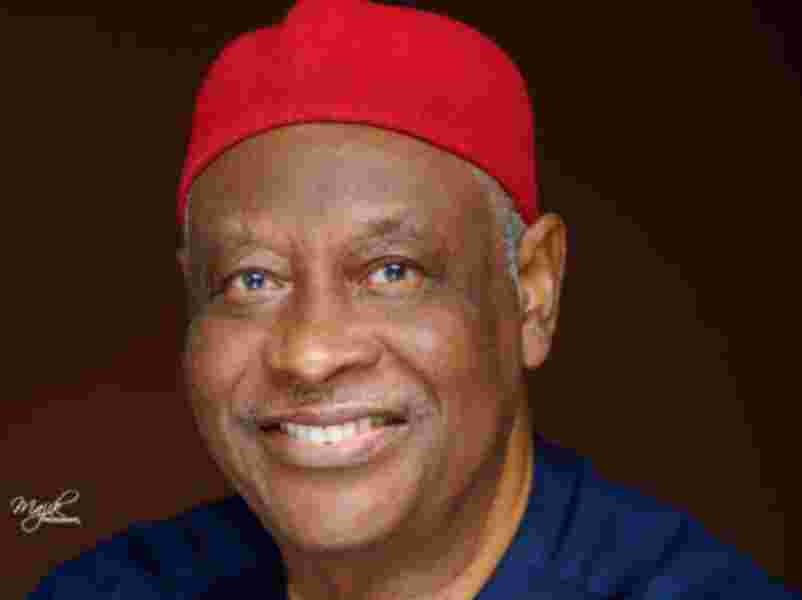
With the death of Chief Ralph Obioha at the age of 80, according to a statement by his family signed by his first son, Chima Obioha, Nigeria has lost not merely a former second republic parliamentarian, businessman and politician, but a man whose life intersected with some of the country’s most consequential struggles.
From the Second Republic and military interventions to the annulment of the June 12, 1993 presidential election, the NADECO struggle and the return to the current democratic rule in 1999, Chief Ralph Obioha, popularly known as the "Okpuruisizuruoha 1 of Arondizogu) in Imo state, has been through all those struggles for the sake and political survival of Nigeria.
For Nigerian NewsLeader Newspaper, a corporate friend of this renowned great political figure, therefore, the appropriate question is not simply who was Ralph Obioha? The more important question is: what did his generation fight for, what did he personally sacrifice, and how much of that dream has Nigeria actually achieved? That is where the real significance of his life lies.
Chief Obioha who migrated from business to parliament, came from Arondizuogu in the present day Imo State and was born into a family with a strong entrepreneurial tradition. Before becoming widely known as a politician and pro-democracy campaigner, he established himself as a businessman with interests extending across banking, brewing, cement and other enterprises. His business career was substantial. By his own account, his enterprises at one point, employed thousands of Nigerians. Yet the accumulation of wealth did not become the defining feature of his public life.
Politics beckoned on Chief Obioha and on the platform of the then ruling National Party of Nigeria (NPN), he became a member of Nigeria's House of Representatives during the Second Republic, serving from 1979 to 1983. Records of the National Assembly show him participating actively in parliamentary business, including proceedings relating to national finance and appropriations. In the House of Representatives, he was Chairman, House Committee on Finance.
The Second Republic was itself an important experiment in Nigeria's democratic history. It was a period of renewed civilian government after years of military rule, but one eventually terminated by another military coup.
Obioha consequently belonged to a generation that experienced the fragility of Nigerian democracy at first hand. But the greatest test of his political convictions was still ahead.
The annulment of the Saturday, June 12, 1993 Presidential election by the military government of General Ibrahim Babangida which was presumably won by late politician and business mogul, Bashorun MKO Abiola
was a moment of decision and personal sacrifice for Chief Ralph Obioha. That election annulment hanged the course of Nigeria's history. The military government's refusal to allow the electoral mandate to stand provoked a nationwide political crisis and gave birth to a determined June 12 pro-democracy movement.
Among those who became associated with that pro-democracy movement led by the National Democratic Coalition, NADECO, was Okpuruisi Chief Ralph Obioha. He was among the eminent Nigerians who formed NADECO in 1994 including President Bola Ahmed Tinub, late Chief Bobo Nwosisi who died in London during the struggle after a fatal fall in a bathroom. Other were: Prof. Wole Soyinka, General Alani Akinrinade, Dr Mokwugo Okoye, (a renowned Zikist), Chief Christian Chukwuma Onoh (a former governor of the old Anambra state and Iyom Bianca Odumegwu Ojukwu's father), Chief Cyrain Ekensi, Chief Bola Ige (former governor of old Oyo state and Attorney General of the Federation, also known as Cicero of Esa Oke), late Afenifere leaders, Pa Abraham Adesanya, Olanihu Ajayi, Ayo Opadokun, Ayo Adebanjo, retired Navy Admiral Ndubisi Kanu (a former military governor of Imo and Lagos states), Dr Alex Ekwueme (Nigeria's former Vice President in the botched Second Republic and leader of the G-34 group that finally toppled military rule along with the Nigerian press), retired Navy Commodore Ebitu Ukiwe (Ochiagha Ndiagbo and Nigeria's former number two citizen during the early days of Babangida's government), among many others.
Chief Obioha, with his large financial resources made from his years in business sector, voluntarily took responsibility for building the NADECO organisation's presence in Canada and the United States, where he became one of its prominent voices during the June 12 struggle. That was not a comfortable assignment.
Military dictatorship was not a political metaphor. It was a system capable of imprisonment, torture, assassination and forced exile. Obioha went into exile for Nigeria to be free and return to democratic rule. From abroad, he joined others in mobilising international opinion against the military rule and demanding restoration of the June 12 mandate and democratic government.
But perhaps the most remarkable aspect of his story was what he left behind. Obioha
lost his businesses and valuable investments. He also lost the comfort of living and working in his own country. Among the enterprises he subsequently identified as casualties of the pro-democracy struggle were a bank, a brewery company, a cement operation and a vegetable-oil business firm.
This is the part of Nigeria's democratic history that must not be forgotten. Nigerians, especially those who did not witness the June 12 political struggle should know that today's Democracy did not arrive in Nigeria in 1999 as a gift. Men and women like Chief Ralph Obioha paid for it. Some, like Chief Bobo Nwosisi, Pa Alfred Rewane, Chief MKO Abiola's wife and Abiola himself including many others, paid with their lives during the period.
Others including journalists paid with outright death, imprisonment and with exile. Some lost their businesses, careers, properties and families' peace. Chief Ralph Obioha was one of those who paid materially for the struggle. Years later, he would insist that he had no regrets. That statement perhaps captures the philosophy of his generation better than any monument could.
The June 12 struggle was not merely about one politician seeking office. NADECO fought for a true national cause. At its deepest level, it was about whether the votes of Nigerians should have meaning and about whether the military could annul an election and substitute its own political will for that of the electorate. The NADECO struggle was also about constitutional government, fundamental rights, freedom of expression, political participation and the rule of law.
Chief Obioha remained convinced that the struggle had not been fully concluded simply because soldiers eventually returned to the barracks. This was one of the central messages of his later years. He repeatedly argued that democracy without justice, security, economic opportunity and institutional accountability could become little more than periodic elections. That warning deserves attention. Nigeria has had uninterrupted civilian government since 1999, an achievement that should not be dismissed. But democracy must be measured not only by the regularity of elections. It must also be measured by the quality of institutions, protection of citizens, economic opportunity, accountability and equality before the law. These were among the questions that Obioha continued to raise.
When democracy returned in 1999, Chief Ralph Obioha did not retire into silence. He became National Chairman of the Justice Party (JP), a platform that participated in Nigeria's Fourth Republic politics and later fielded Reverend Chris Okotie as its presidential candidate in the 2003 general election. His political career therefore extended beyond NADECO. He continued to speak on national affairs, corruption, security, unemployment, infrastructure, political restructuring and the place of the South-East in Nigeria. Obioha also became deeply involved in Ohanaeze Ndigbo affairs.
His involvement was sometimes controversial, including a leadership dispute in which he was one of two figures claiming the presidency-general of Ohanaeze.
In 2016, however, a reconciliation process resulted in Obioha withdrawing his claim and recognising Chief Enwo Igariwey as the President-General, while he subsequently played a role in efforts to reconcile the organisation. This episode, too, is part of his complicated political legacy. Public figures should not be remembered only through flattering accounts. Their disagreements, controversies and contradictions are part of their personal and public history. What is important is that Obioha remained engaged all through.
One of the interesting dimensions of Obioha's public life was the relationship between his Igbo identity and his Nigerian nationalism. He was an Igbo political leader who stridently, vehemently and consistently spoke for Nigeria. Obioha was an important voice in Igbo affairs, but he repeatedly spoke about Nigeria as a whole. He advocated greater fairness among the country's constituent parts and supported arguments for restructuring and true federalism. His position was that Nigeria's enormous diversity should not be treated as a weakness. Instead, the federation should give its component parts sufficient room to develop while maintaining a viable national framework.
Whether Nigerians agree with every aspect of that argument is a matter for democratic debate. But the argument itself remains central to the country's continuing constitutional conversation.
Perhaps the most revealing episode of Obioha's final year was his rejection of a national honour offered by President Bola Tinubu during the 2026 Democracy Day celebrations. The Federal Government had included him among Nigerians being recognised for their contributions to the June 12 struggle. Obioha declined the honour, citing concerns including the continued detention of Nnamdi Kanu and the security situation in Nigeria.
Whatever one's position on that decision, it was consistent with an important characteristic of Obioha's public life. The reverred Okpuruisizuruoha of Arondizogu was prepared to disagree publicly. He apparently believed that an honour associated with the struggle for democracy should be consistent with the democratic values for which the struggle was fought. That is a powerful principle for a democracy.
A National honours award should not merely celebrate the past. They should also remind the living of the standards to which public institutions ought to aspire. That is the final lesson in Obiora's action.
Early this year, 2026, In January, Chief Ralph Obioha also rejected the description of the January 1966 military coup as an "Igbo coup", arguing that the actions of military officers should not be collectively attributed to an entire ethnic group. It was another example of a man who remained willing, even in his final months, to enter difficult national conversations. That is the Ralph Obioha that Nigerians should remember. Not a saint or an infallible politician, and not
merely an Igbo leader. But a Nigerian who lived through some of the country's darkest political moments and made choices that carried considerable personal consequences.
Okpuruisi Arondizogu was a businessman who became a parliamentarian; a National parliamentarian who became a political organiser; a political organiser who became a pro-democracy activist; an activist who went into exile; and an elder statesman who continued questioning the direction of the country after democracy returned. His life therefore leaves Nigeria with an uncomfortable but necessary question: If men like Ralph Obioha were prepared to lose so much for democracy, why are Nigerians still struggling to make democracy deliver the justice, security, dignity and prosperity for which they fought? That is the question that should accompany his memory.
Nigeria should mourn Ralph Obioha. But mourning alone is insufficient. The greatest tribute to those who fought for June 12 is to protect the democratic rights they fought to establish. It is to ensure that elections genuinely reflect the will of voters and to strengthen institutions rather than personalities. It is to make justice accessible to the poor as well as the powerful and to build a federation in which citizens feel that they belong. Besides, it is to create an economy in which enterprise produces opportunity rather than merely enriching a narrow political class.
Obioha's businesses may have been lost during the democratic struggle. His political offices have long disappeared. The exile has ended. And the controversies have become history. But the democratic question remains. What kind of Nigeria are we building? That is perhaps the most enduring legacy Ralph Obioha leaves behind. He fought for democracy because he believed Nigeria was worth fighting for.
Now, the responsibility belongs to those of us who remain. That is why his life should not end with an obituary. It rather should become a national examination of conscience. NNL.