

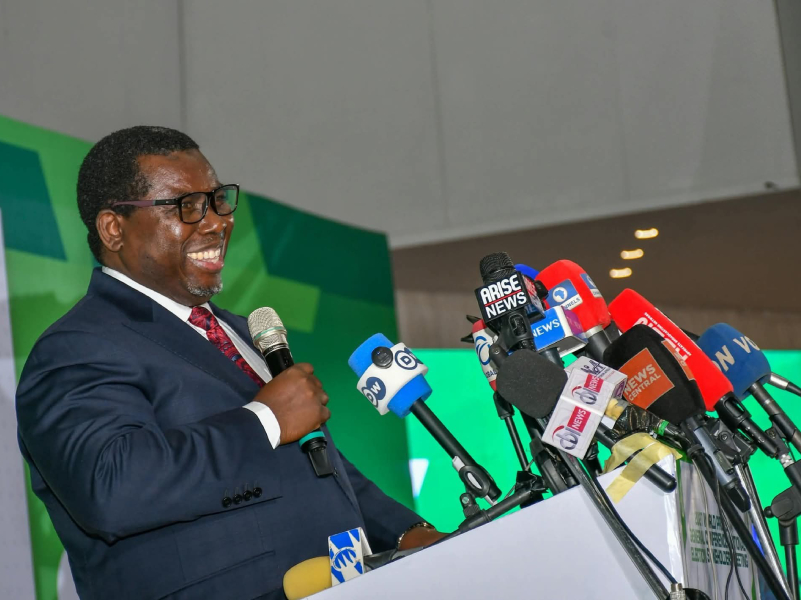
- Commission's Boss Terrified, Hides Inside Vehicle As Protesters Insist On His Immediate Resignation
By Okezie Nwachukwu (NewsLeader Correspondent, In Chatham House, London)
The streets outside Chatham House turned into a scene of raw democratic fury on Thursday, November 12, 2026, as furious Nigerian diaspora protesters ambushed and blockaded the convoy of Prof. Joash Amupitan, the Chairman of Nigeria’s Independent National Electoral Commission (INEC).
The dramatic confrontation, captured in viral videos, saw demonstrators jump on the bonnet of his official black car, raining abuses and branding him a “criminal” and an “election rigger” as he arrived for a scheduled appearance.
The atmosphere was electric and hostile as the crowd, made up largely of UK-based Nigerians, surrounded the vehicle, refusing to let it pass. Security personnel stood by tensely as protesters pressed against the car, demanding that the INEC chief step out and face them.
“You want to mess with the electoral process,” one protester could be heard shouting in the footage, encapsulating the deep-seated anger over the perceived manipulation of Nigeria’s democratic machinery ahead of the 2027 general elections.
The protesters did not mince words, labeling the electoral body a “criminal organisation” and directly accusing Amupitan of undue support for President Bola Tinubu and the ruling All Progressives Congress (APC).
The protest was not a random outburst but a calculated mobilisation. Activists had planned the rally to coincide with Amupitan’s appearance at a high-profile panel hosted by Chatham House and the Kimpact Development Initiative, titled “Nigeria’s 2027 Elections”.
The demonstrators were demanding Amupitan’s immediate resignation over a litany of alleged electoral irregularities, specifically citing the discovery of duplicate entries, the use of artificial intelligence-generated images, and the existence of fake polling units in the preliminary voters’ register.
The timing of the protest is particularly damning for the INEC chairman, coming just days after the commission admitted to a massive clean-up of the voter roll. INEC had announced it removed over 1.6 million invalid records and flagged 54 officials across 10 states for investigation. While the commission framed this as a proactive integrity measure, critics and diaspora groups viewed it as an admission of systemic failure and potential sabotage.
The controversy has been fueled further by claims from civil society leaders, including former Education Minister, Oby Ezekwesili, who demanded an independent probe, arguing that INEC cannot be trusted to investigate itself.
Prof. Amupitan, a Senior Advocate of Nigeria (SAN) and legal scholar, was appointed to the helm of INEC in October 2025, succeeding Professor Mahmood Yakubu. His tenure was touted as a new dawn for the commission, with early promises of neutrality and credible elections.
However, the honeymoon has been brutally short. The crisis of confidence has been exacerbated by a shadowy controversy over a contested X (formerly Twitter) account attributed to him, a saga that INEC attempted to quell with a forensic report claiming that the account was fake and part of an impersonation campaign, a conclusion that many Nigerians have rejected.
Inside the Chatham House venue, the contrast could not have been starker. While protesters raged outside, Amupitan attempted to project an image of reform and independence. He pledged to turn down any political or diplomatic appointment after his tenure at INEC, a move clearly designed to demonstrate his impartiality.
He also announced the introduction of technical safeguards to prevent inaccurate results from being uploaded to the INEC Result Viewing Portal (IReV) during the 2027 elections. Yet, these assurances were likely drowned out by the chants of “coward” and the thunderous boos from his own countrymen who had traveled to London to hold him accountable.
The incident has exposed the deep chasm between INEC’s official narrative and the palpable distrust of the Nigerian electorate, both at home and abroad. For the protesters, Amupitan’s presence at Chatham House was not an opportunity for dialogue but a stage for accountability.
By blocking his car and calling for his resignation, they have sent an unmistakable message that the Nigerian diaspora will not be silent spectators in the run-up to the 2027 elections.
The images of a besieged INEC chairman in the heart of London will likely reverberate through Nigeria’s political landscape, serving as a stark warning that the quest for credible elections is far from over. NNL.