
By Celestine Okafor (Editor-in-chief)
Twenty-nine years after the death of Afro-jazz music legend, Prince Nico Mbarga, the voice behind Africa’s most enduring maternal anthem, "Sweet Mother", still echoes. And his children now want the world to hear it again.
There are songs that become hits and classics. And there are songs that appear to acquire a life of their own. Prince Nico Mbarga’s “Sweet Mother”, Africa's evergreen maternal anthem, belongs to the last category.
More than four decades after the song was released, its opening words remain instantly recognisable across generations. It is a simple, affectionate tribute to the woman who gave birth, nurtured, suffered and sacrificed for her child. "Sweet Mother" was music stripped of pretension. No complicated vocabulary. No elaborate philosophy. No attempt to impress.
Just a son talking about his mother. And somehow, that simplicity became its greatest strength.
Now, nearly three decades after the death of the Cameroonian-Nigerian highlife legend who sang the song, his family members, the Nico Mbarga family are attempting something both ambitious and deeply personal — to return their father's music to the international stage and ensure that the name Prince Nico Mbarga does not become merely a nostalgic footnote in African music history.
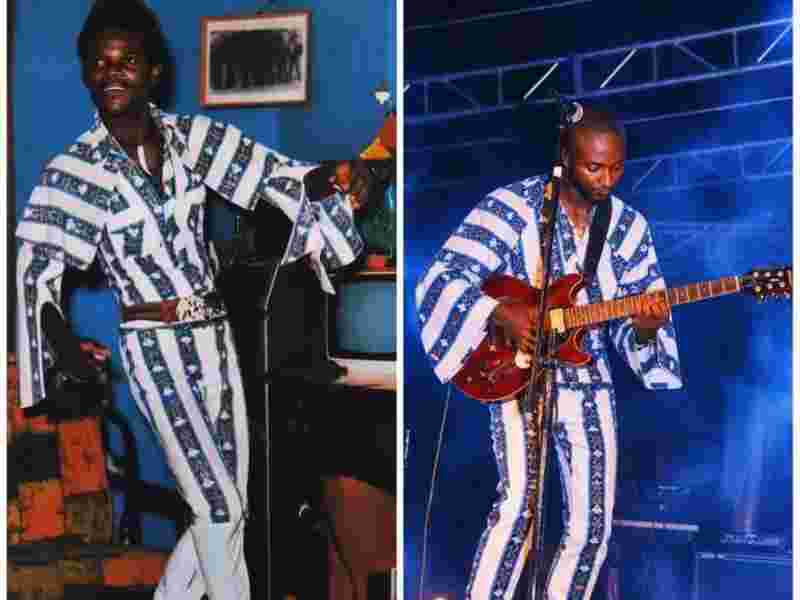
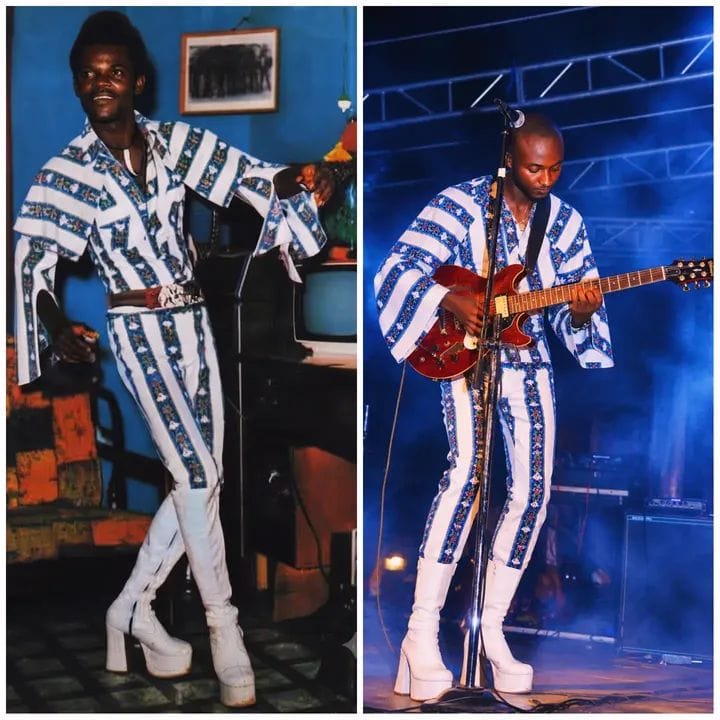
In a recent emotional recollection, his daughter, Estelle Mbarga, described the mission in unmistakably family terms. She and her siblings want to take their father's music around the world again. His sons, Nico Mbarga Jnr and Phils Mbarga, are among those carrying the musical torch through the continuation of their late father's Rocafiljazz band. It is more than a musical project, a children's attempt to keep their father's voice alive.
THE BOY WHO CAME FROM TWO WORLDS
Prince Nico Mbarga was, in many ways, a child of two countries and two cultures.
He was born in Nigeria to a Nigerian mother and a Cameroonian father, and grew up largely around Ikom, in the present day Cross River State, South South, Nigeria. His upbringing was far removed from the glamour that would later surround his name.
His childhood was reportedly marked by hardship. His father died when Nico Mbarga was still young, leaving his mother to raise the children and provide for the family. Music became part of the young boy's escape, education and eventual destiny.
The Nigerian Civil War would also profoundly shape his journey. During the conflict, Mbarga found himself in Cameroon, where he worked around a Congolese musical group. He was initially a “band boy”, carrying instruments for musicians, but he was also quietly absorbing another musical tradition.
He fell in love with Congolese rumba music style and its distinctive guitar patterns. That experience would later become crucial to the sound that made him famous. Prince Nico Mbarga was not simply reproducing Nigerian highlife. He was absorbing, combining and transforming influences — highlife rhythms, Congolese guitar techniques, African melodic structures and the everyday language of ordinary people. That fusion eventually became part of the musical identity associated with him.
THEN CAME ‘SWEET MOTHER’ TUNE
When “Sweet Mother” emerged in the 1970s, the music business did not immediately recognise what it had. The song had reportedly faced rejection before eventually being recorded and released in 1976 by Rogers All Stars, an Onitsha-based Nigerian record company. The irony is difficult to miss. A song that would eventually become one of Africa's best-known recordings was initially considered too simple by some industry gatekeepers. But the public decided differently. “Sweet Mother” travelled from Onitsha to the rest of Nigeria, across West Africa and eventually into the wider world.
It was sung in Nigerian Pidgin English — the language of the streets, markets, homes and ordinary people. Its subject was universal: the sacrifices of mothers. That combination gave the song an extraordinary portability.
A Nigerian could hear it. And so could a Cameroonian or a Ghanaian or a Sierra Leonean, a Liberian or Caribbean listener. These diverse nationals could understand its emotional message even without knowing every word. The success of 'Sweet Mother' was not dependent on sophisticated production technology. It depended on recognition. People heard their own mothers in it. That may explain why “Sweet Mother” has survived changing musical fashions, technological revolutions and generations of performers. In 2004, BBC listeners voted it in a poll as Africa's favourite song, reinforcing its extraordinary place in the continent's popular musical memory.
WHY THE SONG WAS SPECIAL
The magic of Prince Nico Mbarga was not only in what he sang, but in how naturally he sang it. His music did not appear to be struggling to become African. It simply was African. The guitar carried a distinctly Congolese flavour, while the rhythm retained the warmth and danceability of West African highlife. His voice was conversational rather than excessively theatrical. He could sound like a man talking to his neighbour. And that intimacy was powerful.
“Sweet Mother” also transformed motherhood into a subject worthy of popular music without making the song inaccessible.
The mother in the song is not an abstract symbol. She is the woman who carries her child. The woman who worries, who comforts, who sacrifices and whose love remains when almost everything else disappears.
Academic analysis has similarly interpreted the song as an autobiographical celebration of African motherhood, rooted in Mbarga's recollection of his own childhood and his mother's sacrifices.That is perhaps why the song continues to work. It is personal but never private. It is African but never exclusive. It is old but never entirely trapped in its era.
THE MAN BEHIND THE LEGEND
Away from the stage, however, Prince Nico Mbarga was not simply the larger-than-life entertainer remembered by audiences.
To his children, he was Daddy. And that distinction is becoming increasingly important as the family attempts to reconstruct his musical legacy. His daughter, Estelle Mbarga, recently recalled her father in deeply human terms, remembering the nights when she waited for him to return from musical performances. She described the pain of watching him leave for the stage while she remained behind, and the special affection she felt for him as her father rather than as the celebrity known to millions.
That recollection gives another dimension to the story of Prince Nico Mbarga.
Behind the public performer was a father whose children experienced the sacrifices of an itinerant musician's life. They saw the man behind the microphone. They knew the laughter, the absences, the family moments and the personality that audiences could not see. And now they have inherited something more complicated than a collection of old records.They have inherited a name.
Patience Mbarga: THE WOMAN WHO REMAINED CLOSE TO THE LEGACY
Mbarga's widow, Patience Esame Mbarga, has also remained an important human link to the musician's later years. Accounts of the family describe Patience as the woman Mbarga married and the woman who remained associated with his home and legacy in Ikom, a southern geographical flank of Cross River State, South South, Nigeria.
Reports have also portrayed her as a relatively private figure compared with the enormous public personality of her late husband. Her public visibility has therefore been different from that of many spouses of famous entertainers. She has not attempted to become the celebrity. Her significance is instead tied to memory — preserving the domestic side of the story of a musician whose public life became much bigger than his private world. In accounts of Mbarga's final years, Patience recalled a man who continued to sing and compose even away from the major stages. That image is striking. For Nico Mbarga himself, music apparently was not simply employment. It was an instinct. It followed him home.
THE CHILDREN TAKE UP THE MICROPHONE
The most intriguing chapter in the Mbarga story may now be unfolding. Some of his children have chosen to become musicians and custodians of his musical tradition.
Recent accounts identify Estelle and her brothers Nico Mbarga Jnr and Phils Mbarga among those actively involved in keeping their father's music alive, with Rocafiljazz continuing under the younger generation's leadership. This raises a compelling question: Can children inherit a musical legacy without becoming prisoners of it?
That will be the real test. It is relatively easy to perform “Sweet Mother” at an anniversary concert. And it is considerably harder to make the Prince Nico Mbarga musical identity relevant to a 21st-century audience.
Today's music industry is dominated by streaming platforms, social media, digital marketing, collaborations, music videos and rapidly changing tastes. The children therefore face two choices. They can preserve their father's music exactly as it was, treating it as a museum piece.
Or they can preserve its soul while finding new ways to introduce it to younger audiences.
The second route may offer the greater possibility of longevity. The challenge will be to modernise without destroying authenticity. A remix can introduce “Sweet Mother” to young listeners. A documentary can tell the story behind the song. A properly managed digital catalogue can bring the recordings to global streaming platforms.
International collaborations can connect Mbarga's highlife and Congolese-inspired guitar sound with contemporary African musicians. And a carefully produced tribute concerts can transform remembrance into a living cultural experience. But none of these should become an excuse to manufacture a new Prince Nico Mbarga. The objective should be to rediscover the original.
THE WEIGHT OF THE MBARGA NAME
There is another difficulty. Children of legendary musicians inevitably live under the shadow of their parents. Every performance is compared. Every new song is measured against the old songs. And every mistake is magnified because the audience remembers the legend. The Mbarga children therefore do not need to become their father. They cannot. Prince Nico Mbarga belonged to a particular historical moment — a post-war Nigeria, the golden age of highlife, vinyl records, live bands and cross-border African musical exchange.
His children belong to a digital age. Their responsibility is not necessarily to recreate the 1970s. It is to make the artistic values that produced their father's music meaningful in the present. Those values include simplicity, melody, musicianship, emotional honesty and the ability to communicate across ethnic and national boundaries. If they can preserve those qualities, the Mbarga name may continue to grow without becoming a mere nostalgia brand.
A MUSICAL LEGACY THAT BELONGS TO AFRICA
Perhaps the most important thing about Prince Nico Mbarga is that his story cannot be confined neatly within one national border. He was Nigerian and Cameroonian by family heritage. His music drew from several African traditions. His greatest song was recorded in Nigeria, became popular across Africa and eventually reached audiences far beyond the continent. His story therefore reflects something fundamental about African popular culture: music has always crossed borders more easily than politics.
Mbarga's guitar did not ask whether its listener was Nigerian or Cameroonian. His voice did not require a passport. And “Sweet Mother” did not belong only to the Mbarga family. It became part of the emotional vocabulary of millions of Africans. That is why the children's present mission matters.
They are not simply trying to revive their father's career. They are attempting to prevent a piece of African cultural memory from disappearing.
CAN THE KIDS DO IT?
The answer will depend less on the famous surname they carry than on how intelligently they use it. They possess something most new musicians spend years trying to build — an established musical identity, a powerful catalogue, a legendary family name and an audience that already knows at least one of their father's songs. But inheritance alone cannot guarantee continuity. They will need professional management, proper preservation of the recordings, copyright and royalty protection, digital distribution, international publicity, documentary storytelling and a disciplined programme of live performances. Most importantly, they will need to make young Africans care. For the future of Prince Nico Mbarga's music will not ultimately be decided by those who remember him. It will be decided by those who never saw him perform. That is the generation the children must reach.
THE SONG THAT REFUSED TO DIE
Prince Nico Mbarga died in Calabar in June 1997 after a motorcycle accident, while still hoping to continue his musical journey. He was only in his 40s years. His career had been interrupted before his death, and like many African musicians of his generation, his immense popularity did not necessarily translate into the enduring commercial machinery that today's global stars enjoy.
Yet something remarkable happened. The man disappeared but the song did not.
Nearly 30 years later, his hit LP, “Sweet Mother”, remains recognisable. Its words still travel from generation to generation. Its guitar still announces a particular era of African music. And somewhere in that continuing echo are Prince Nico Mbarga's children, trying to give the old voice a new journey.
Perhaps that is the most beautiful part of the story. A father once sang about a mother he could never forget. Now his children are saying the same thing about him. They, too, do not want to forget. And in their determination to carry their father's Rocafiljazz and his music back to the world, the Mbarga children may yet prove that some musical legacies do not die with their creators. They simply wait for the next generation to pick up the guitar. NNL.